E2E User Journey·B2C·Freemium upsell
Turning Free Into Paid: M365 Freemium Growth Strategy
Reframing a stalled growth strategy into a personalized upsell experience — and a framework that outlived the experiment.
Role
Lead Product Designer (2-person team)
Timeline
Aug – Sep 2025
Collaboration
PM, Engineering, Content, Research, Data science, Business, WXP product team
Overview
The situation
Freemium conversion had been flat for 2 years. Users weren't discovering enough premium value to upgrade.
What I did
Joined mid-project, introduced an easy-to-understand user journey framework that aligned the team, and shipped personalized premium previews under significant engineering constraints.
The outcome
Two waves of iteration improved conversion by ~18%. The experiment was sunsetted as the business shifted its focus to AI — but the E2E journey framework was adopted for AI feature trials, and the lead PM specifically cited the "thoughtful E2E user journey" as a model for the business.
The real problem: premium value was invisible
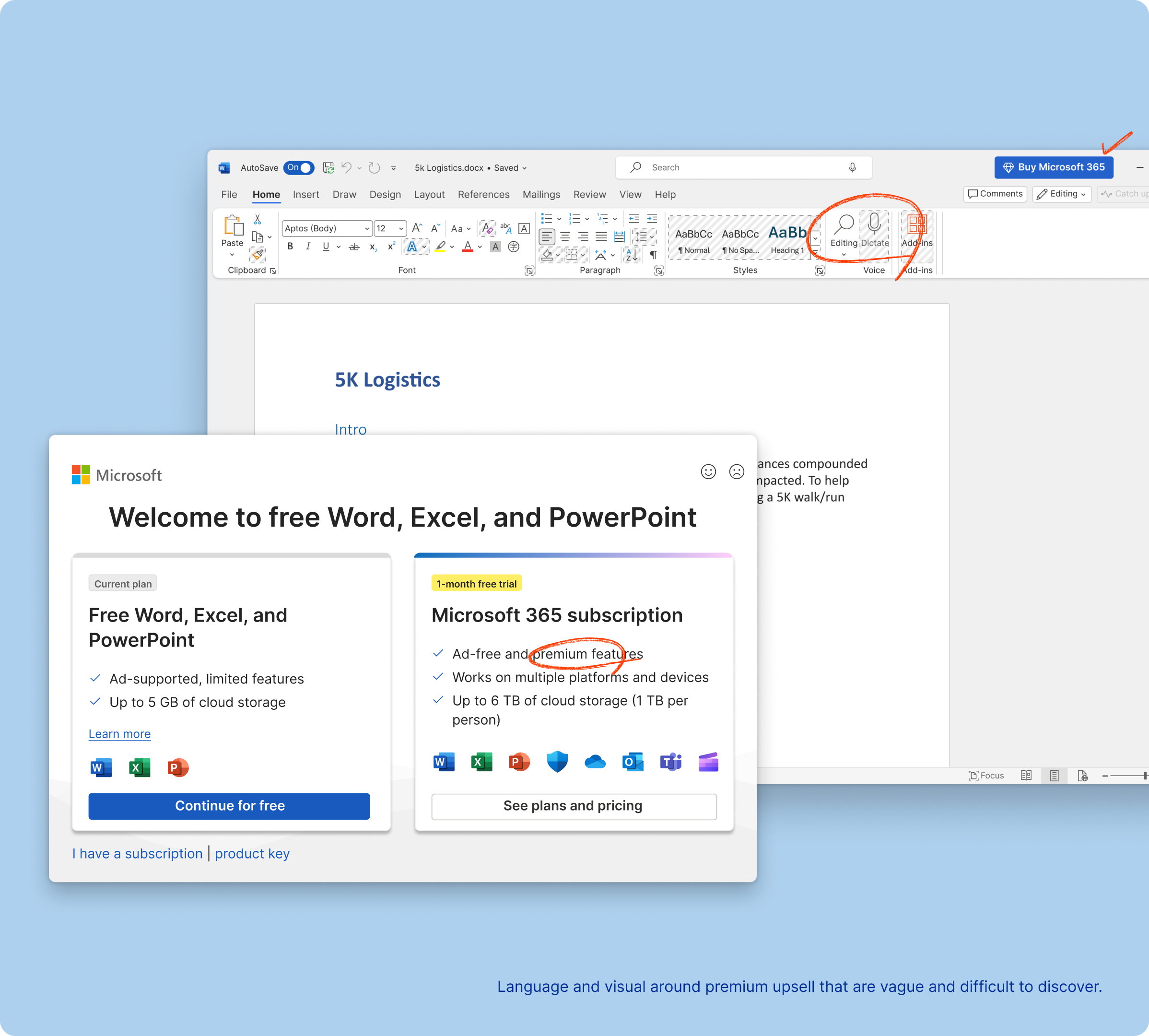
Freemium conversion was trailing behind other entry points to the product, and two years of experimentation hadn't moved the needle. Few users ever clicked on premium features — most didn't notice what was locked. When they did click, the upsell dialog appeared with no explanation of what they'd just tried to access. Value was invisible — and so was the reason to upgrade.
Step 1: User journey framework
Aligning the team around a framework for future decision-making
The problem I saw was misalignment among team members on how much friction to introduce, and when. After examining the core user mental model and the business goal, it was clear to me: value first, friction second.
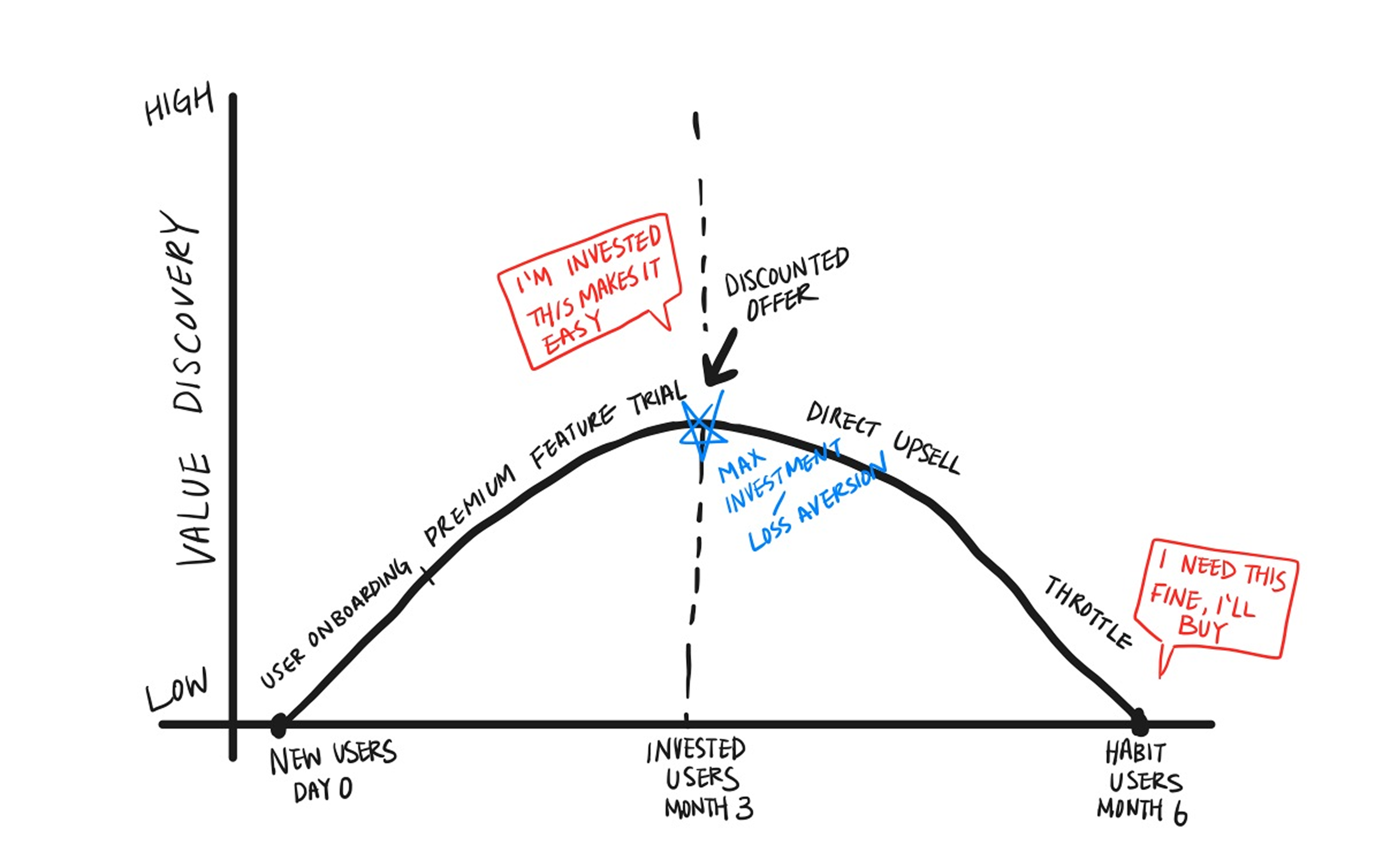
The framework put surfacing the right message at the right moment first, with drop-off recovery paths built in and high-friction actions (like ad blocking) reserved for high-intent users only.
With the framework in place, the team was aligned and decisions became easy to make together. From there, we moved into execution: Interactive Onboarding, the user-intent questionnaire, and personalized premium previews.
Step 2: User flow
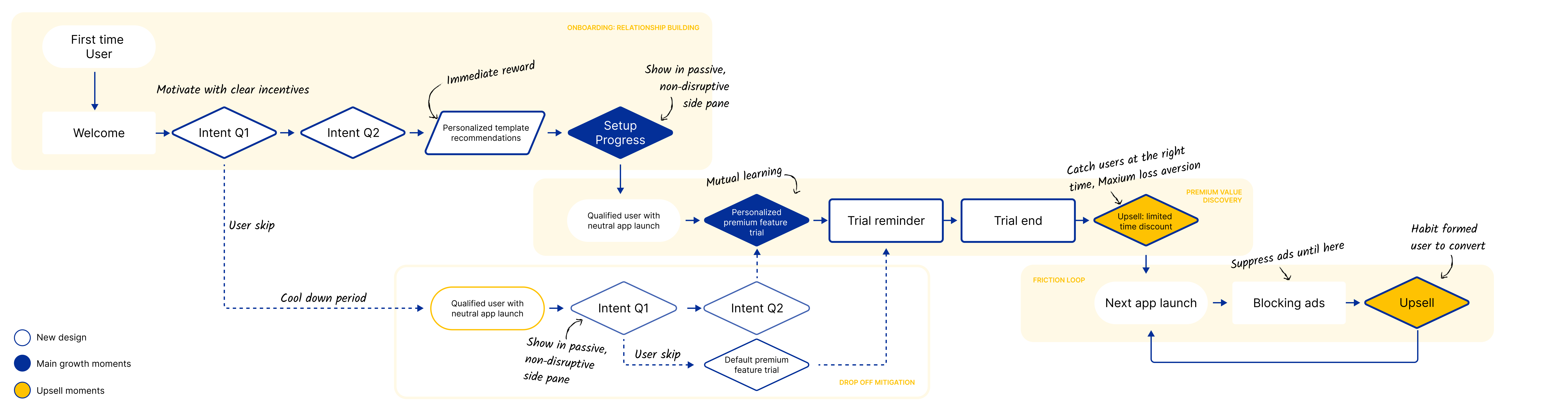
Turning fragmented growth ideas into a cohesive end‑to‑end user flow
The flow was intentionally designed to prioritize time‑to‑value, using user goal signals to surface the right message at the right moment and drive premium conversion. I paired this with clear drop‑off recovery paths and reserved high‑friction actions—such as ad blocking—for high‑intent users who had already formed habits in our apps. The result was a flow that balanced growth outcomes with user trust, positioning upsell as respectful persuasion rather than interruption.
Click to expand the image.
Step 3: Implementing features — Personalized Preview
Less engineering, same experience — the case for pattern reuse
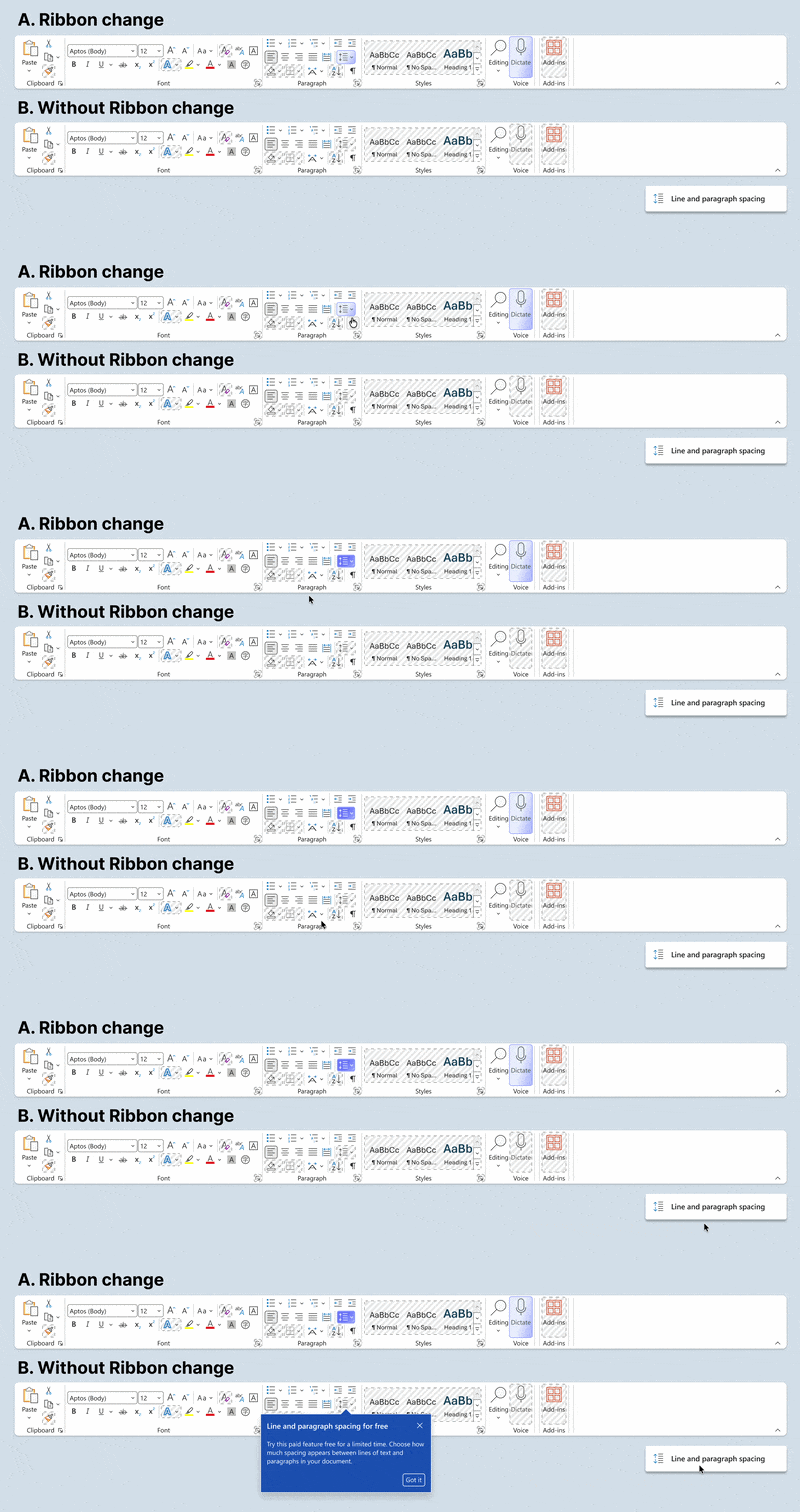
Some concepts, like Interactive Onboarding and the user‑intent questionnaire, were already designed; personalized premium feature previews still needed to be.
During this phase, company resourcing shifted heavily toward AI, significantly limiting engineering capacity. To move forward, we leveraged existing UX patterns wherever possible, such as using Teaching Popovers instead of modifying the ribbon, which carried a high engineering cost (see A, the originally proposed design, versus B, which leverages existing components).
This approach allowed us to ship a personalized experience quickly, preserve UX integrity, and deliver meaningful user value despite tight technical constraints.
Final Walkthrough
Growth is about showing value at the right moment — not forcing an upgrade. This project sharpened that belief with real stakes: a legacy product, constrained engineering, and a team that needed alignment more than more ideas. I am proud of my team that shipped, learned, and knew when the data said it was time to move on.
Impact
A 4-month AB test across new markets showed real progress — Wave 1 improved conversion, and Wave 2 brought the total lift to ~18%. However, it wasn't enough to reach the business goal within 3 years. The experiment was sunsetted.
The framework wasn't. The E2E journey and side-pane patterns were adopted directly into Copilot trial and adoption work. The lead PM noted: "all the learnings we can take to other areas of the business like Copilot trials and Copilot adoption [are] a huge positive."
Proactive in driving alignment — reaching out to stakeholders, sharing thinking, asking for insights, and proposing solutions all at once. Working with stakeholders who have strong opinions might be tough, but Diana masterfully engages them in the conversations. She finds great balance between 'the business' and users' needs — redirecting stakeholders' thoughts when needed, supporting ideas with research, and making sure everyone's opinion is heard.
The collaboration across teams/disciplines has been absolutely exceptional and is reflected in the thoughtful E2E user journey we delivered.