Design process·DE&I·Toolkit
Microsoft community: Co-designing for DE&I
Bringing authentic voices from historically excluded communities into Microsoft product making through co-design.
Role
Founding member, organizer, designer, writer
Timeline
2021 – ongoing
Collaboration
Director of Inclusive Design, Microsoft design community


Where it began...
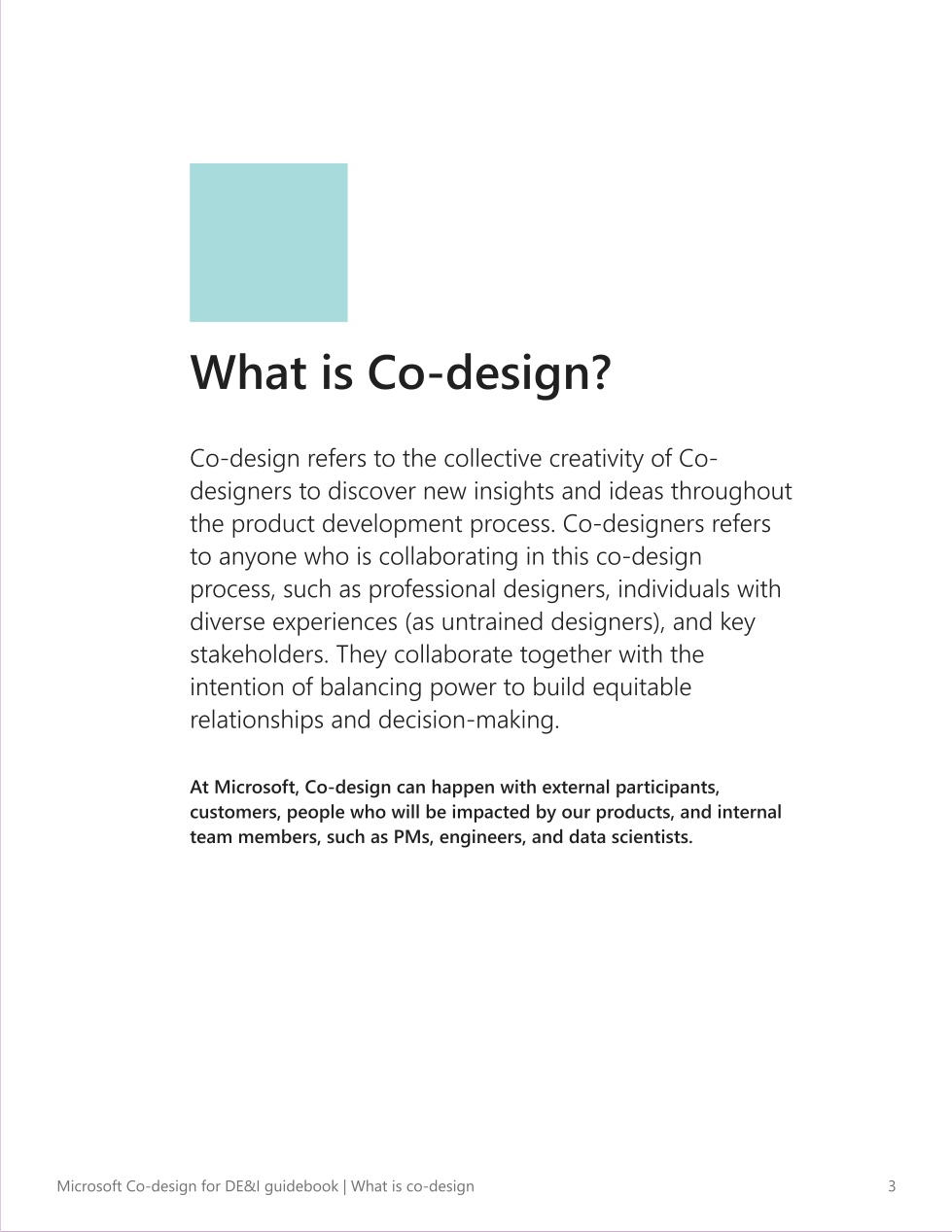
I first learned about the concept of co-design during my studies at the Carnegie Mellon School of Design. I was fascinated by the idea of leveraging lived-experience knowledge in the design process to make better, socially responsible products and services.
I researched co-design more deeply through my master's thesis on a participatory community fund with co-design expert Prof. Kristin Hughes.
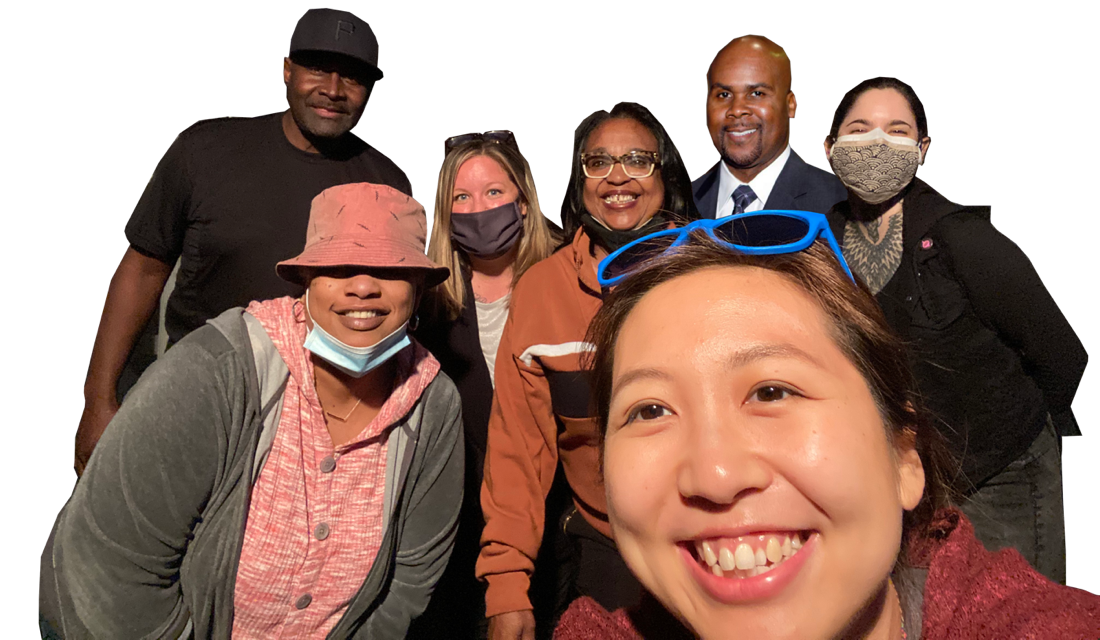

Proof of concept
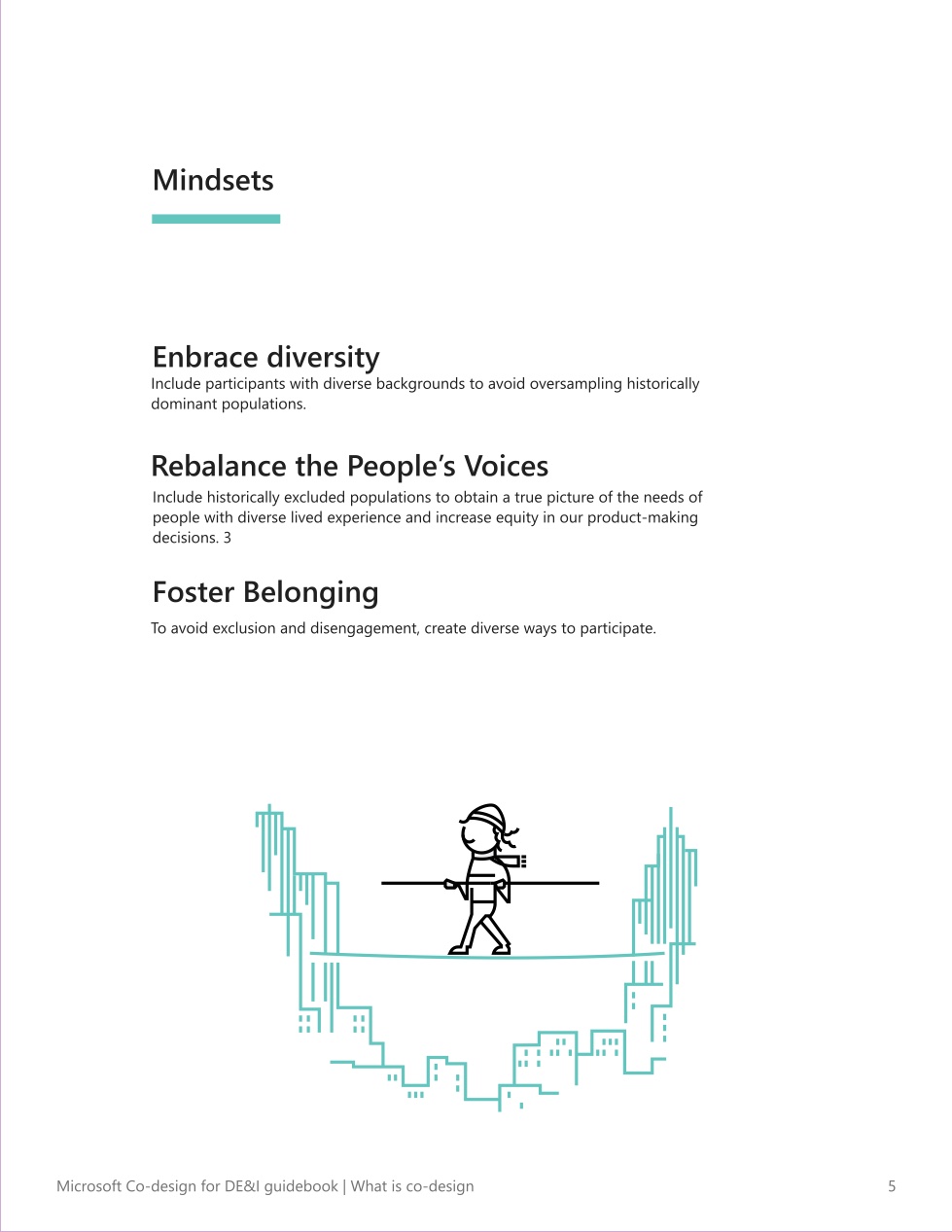
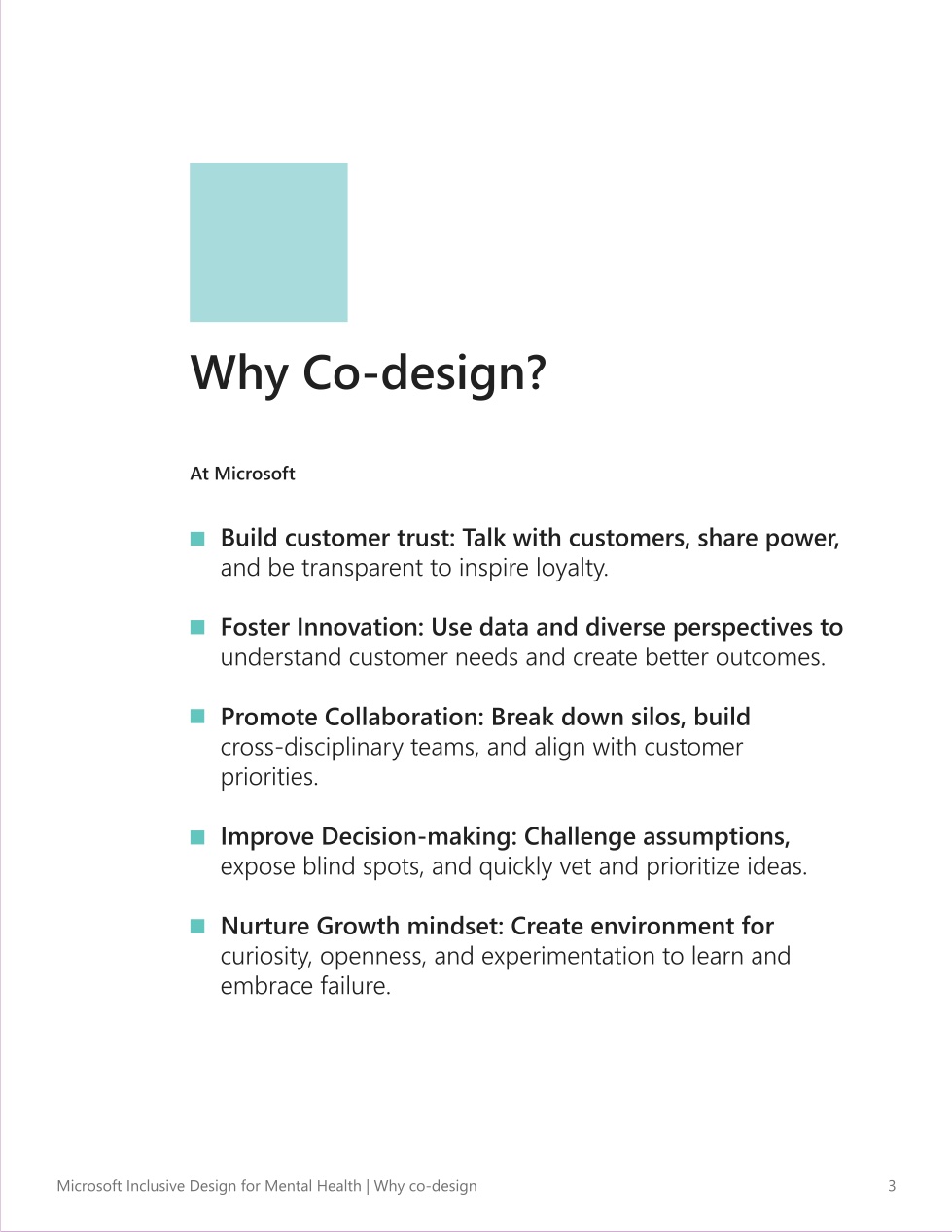
At Microsoft, I saw that there was a gap in authentic user voices in product making, especially voices from historically excluded communities. Co-design was the perfect way to bridge this gap.
I used Microsoft's annual hackathon to start the project and build momentum for co-design within the Microsoft design community.
How might we co-design beneficial productivity products for everyone?
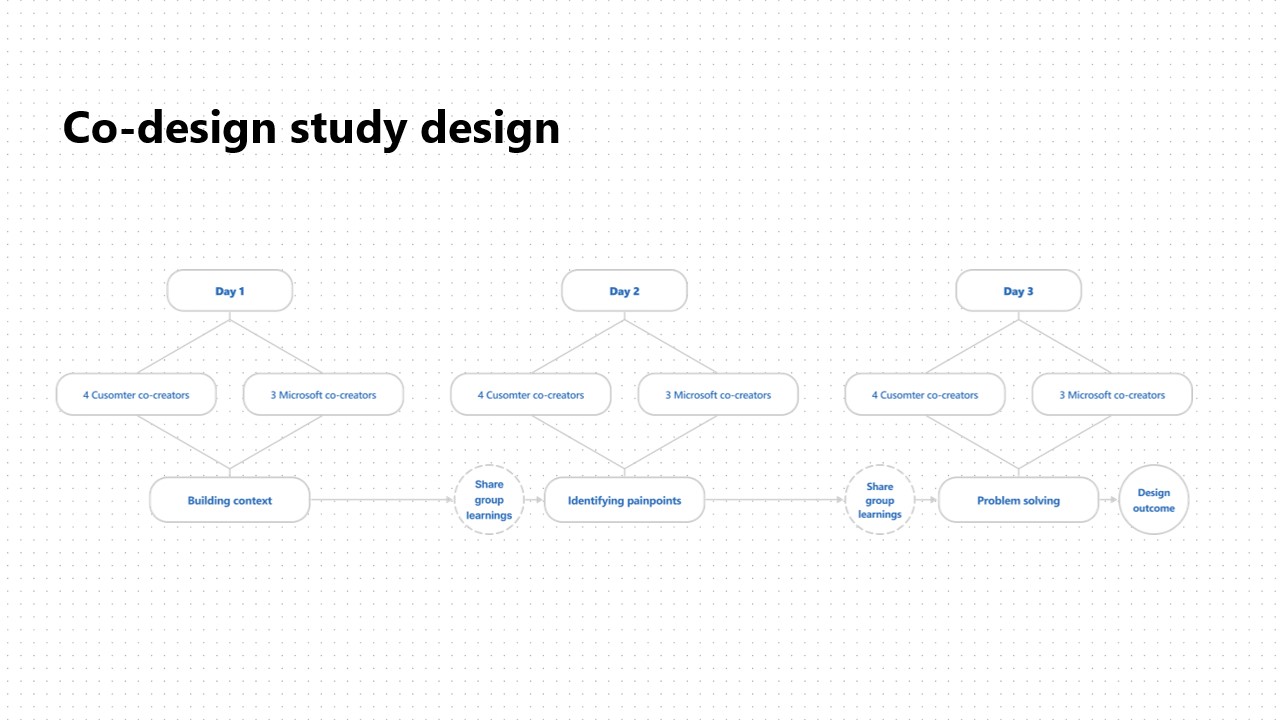
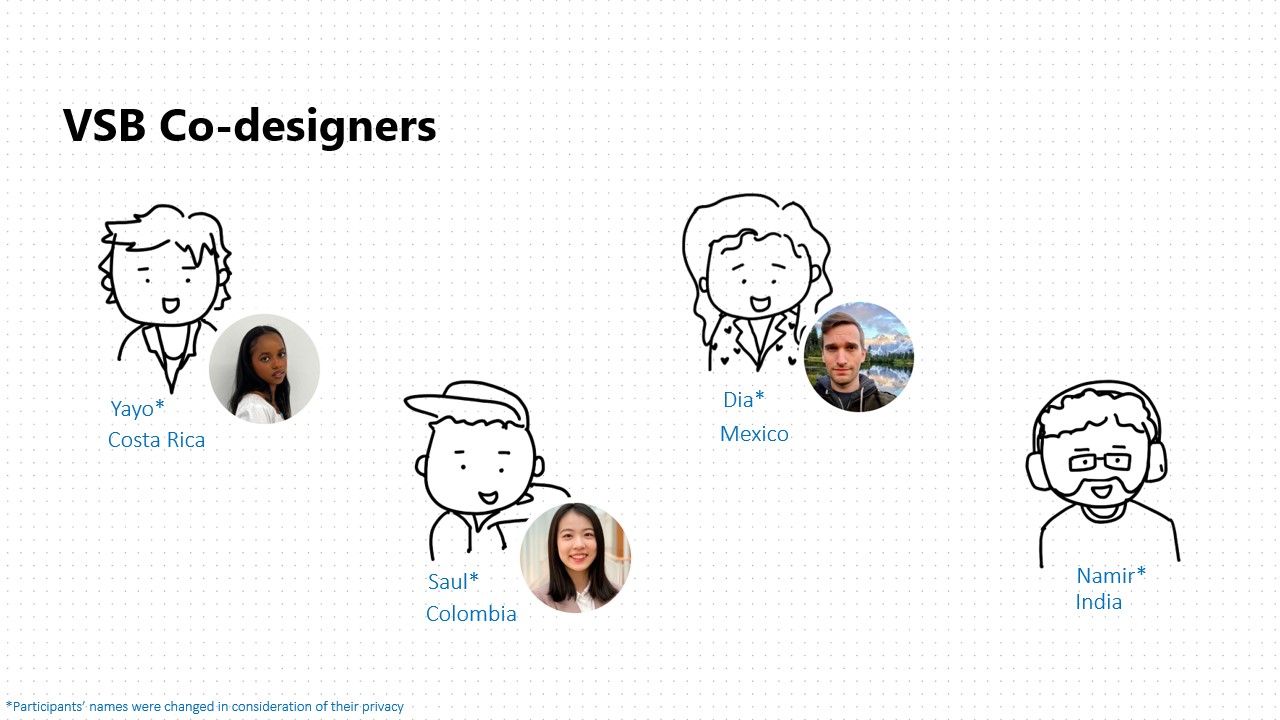
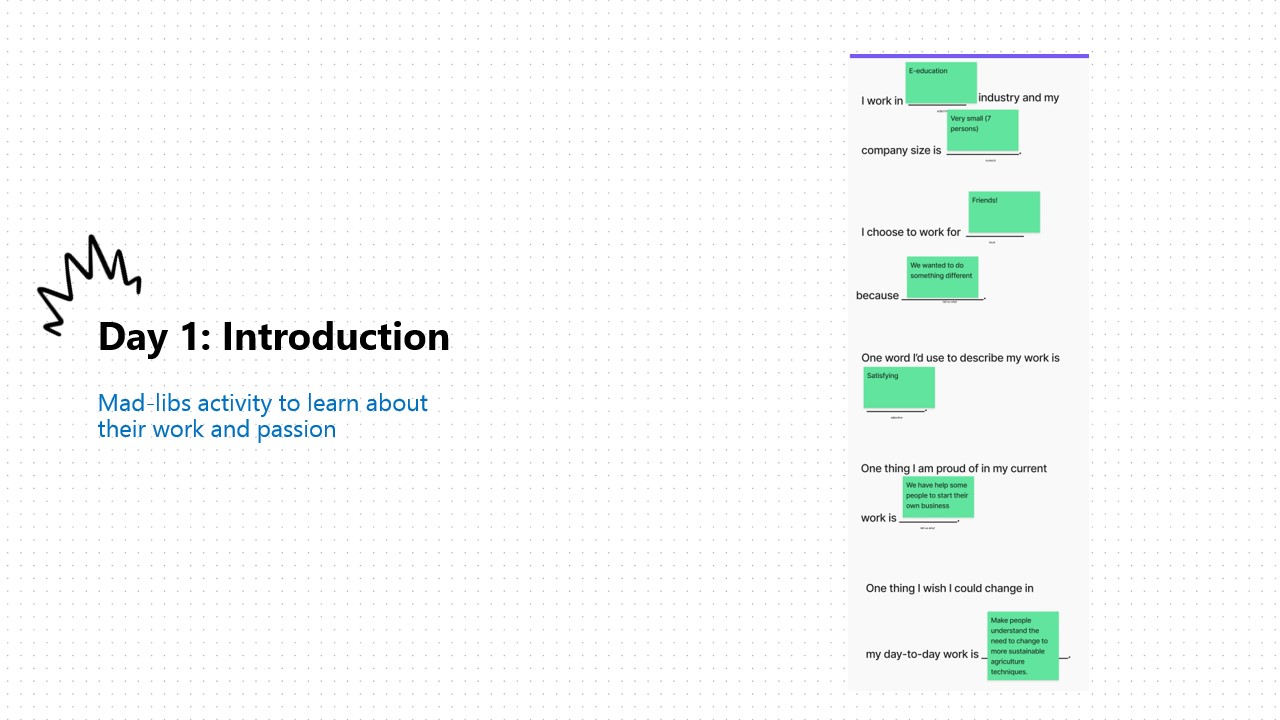
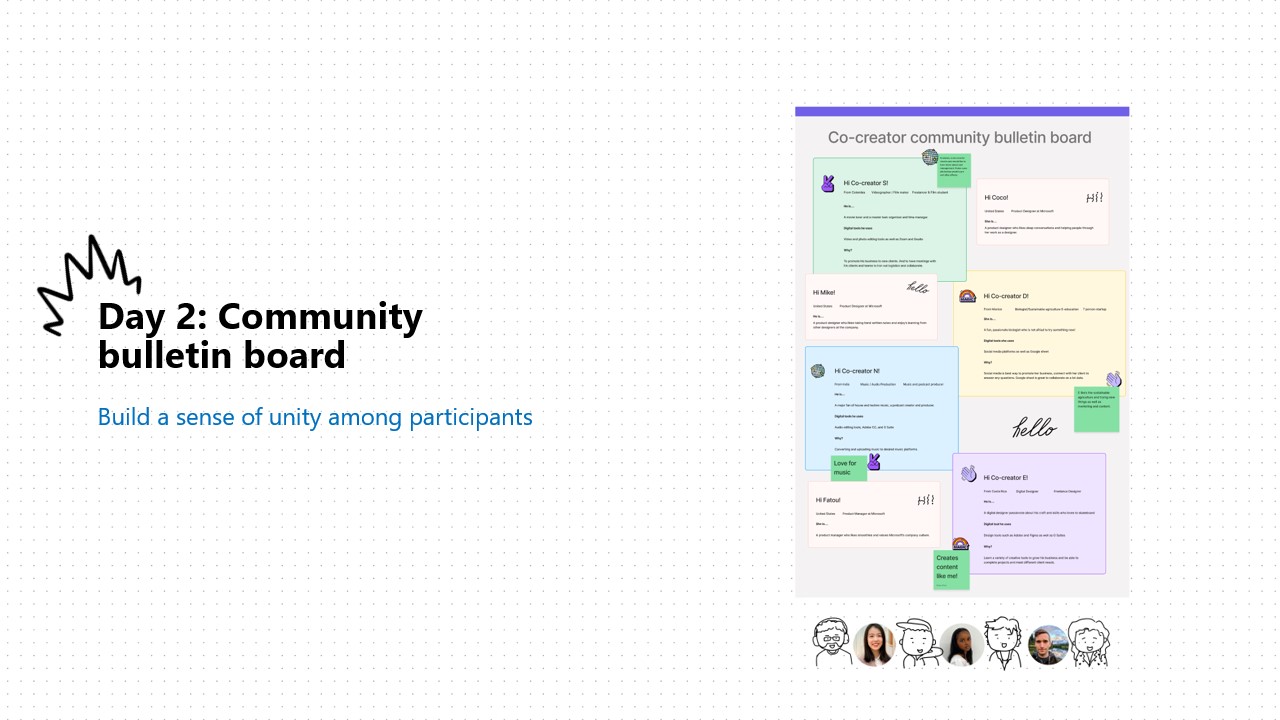
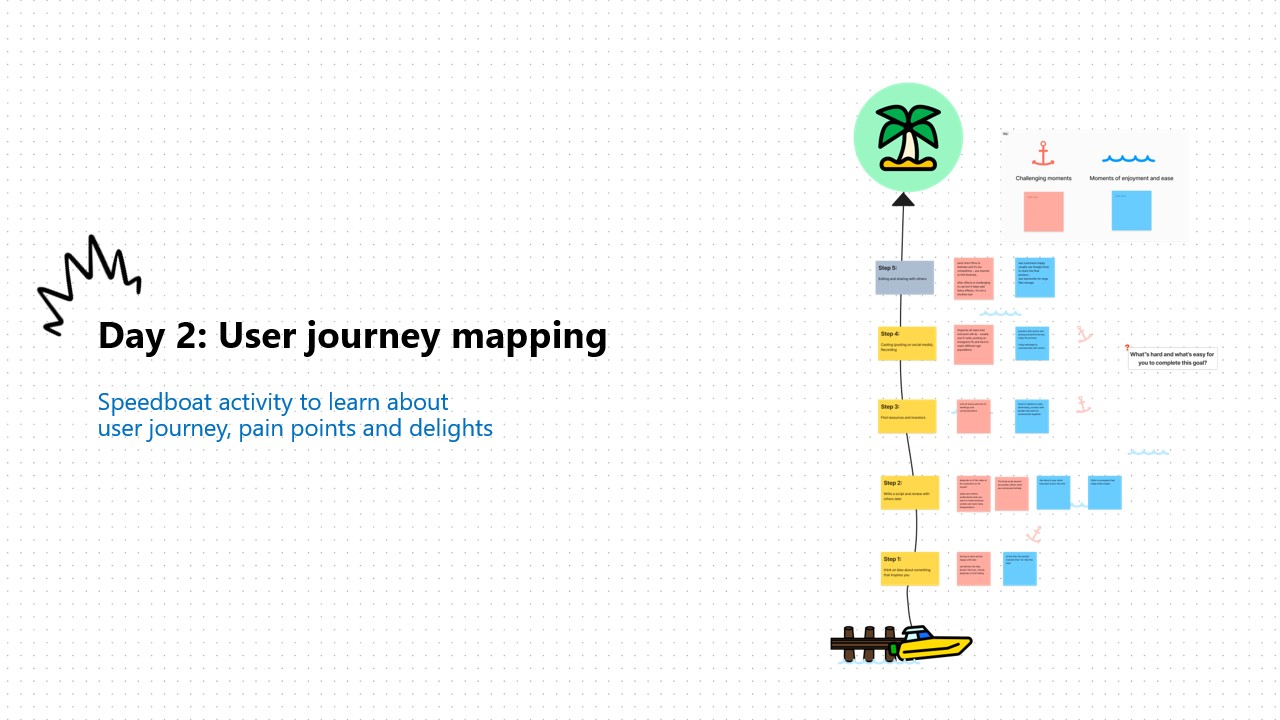
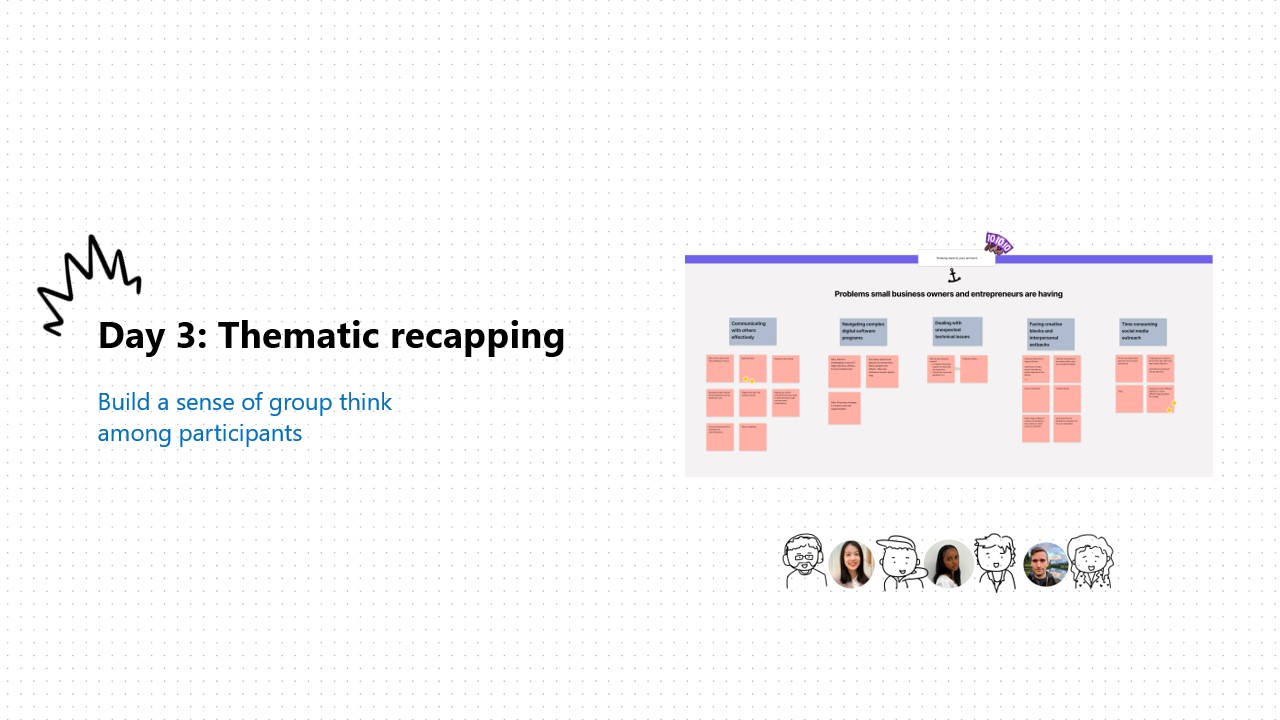
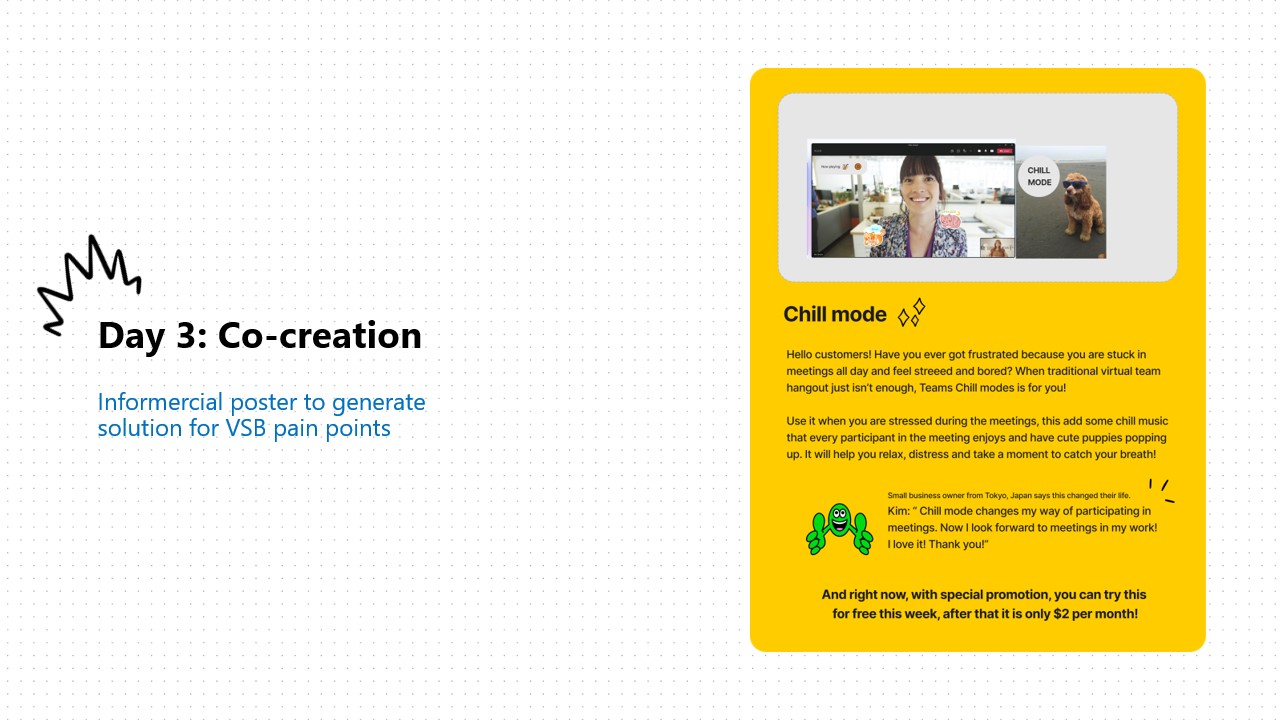
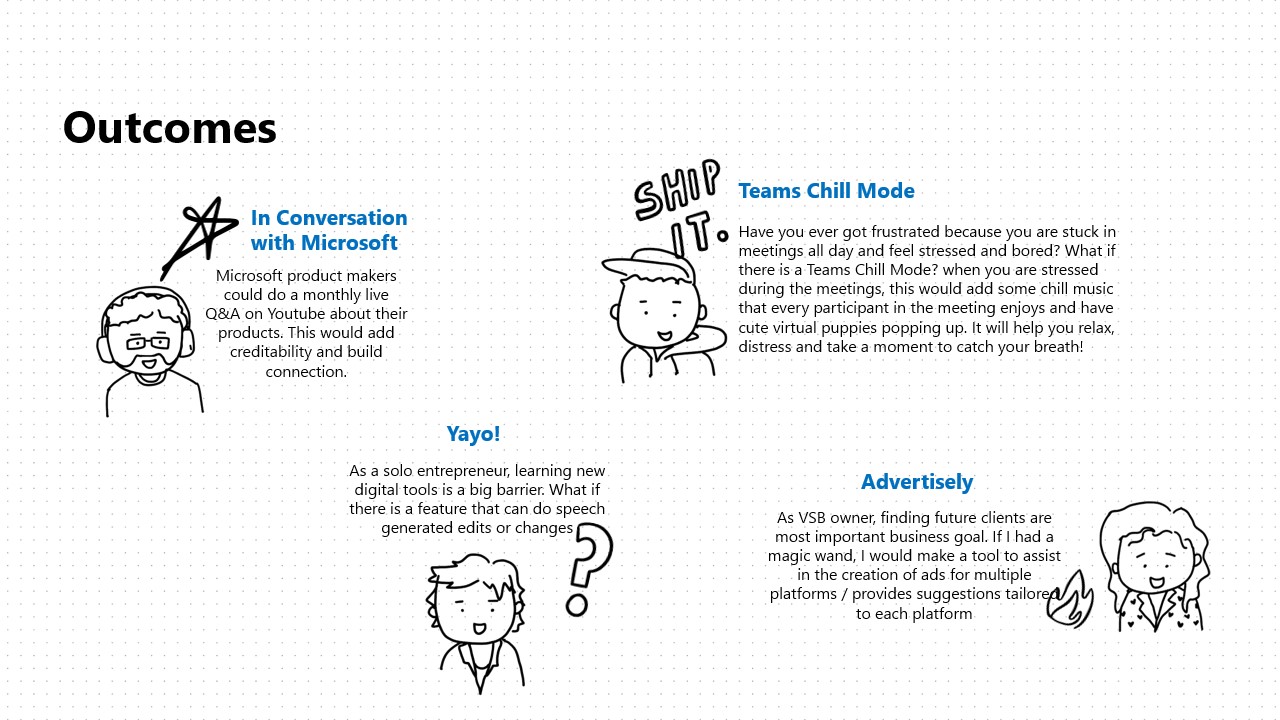
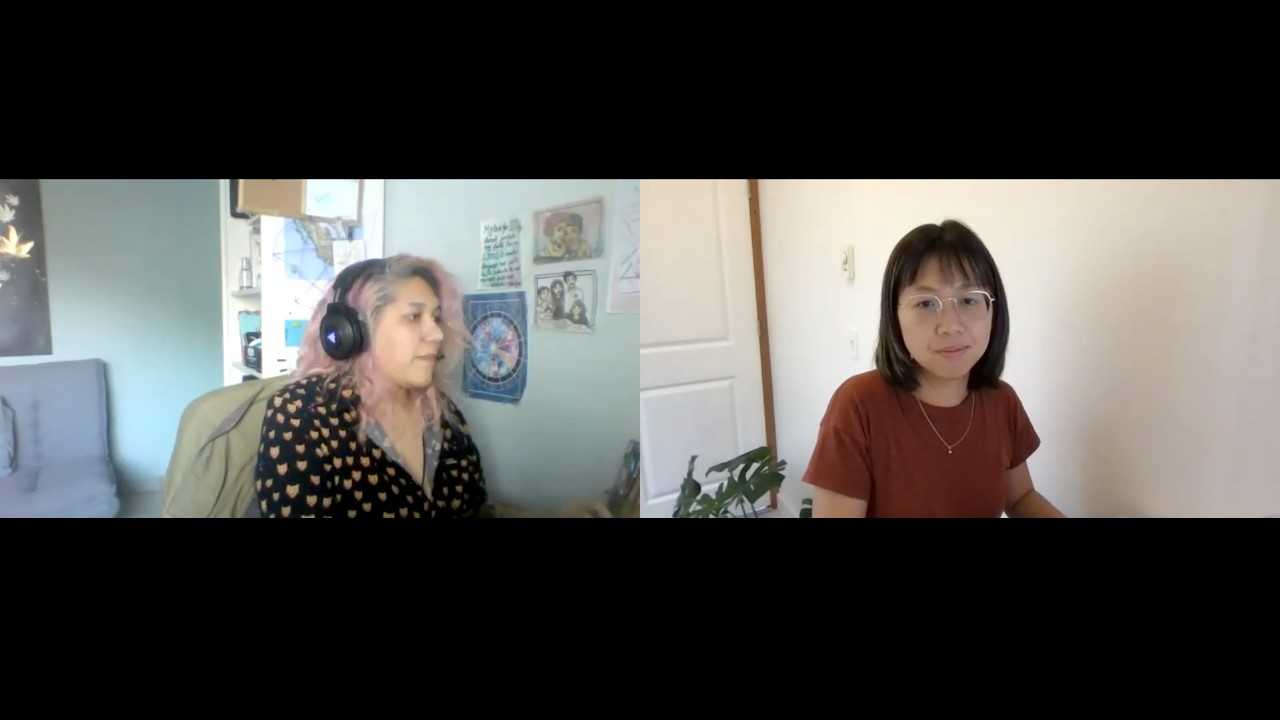
We paired a Microsoft product maker with customers who use Microsoft Office. Using platforms like UserTesting, we recruited customers from marginalized segments of the population (income, internet access, education).
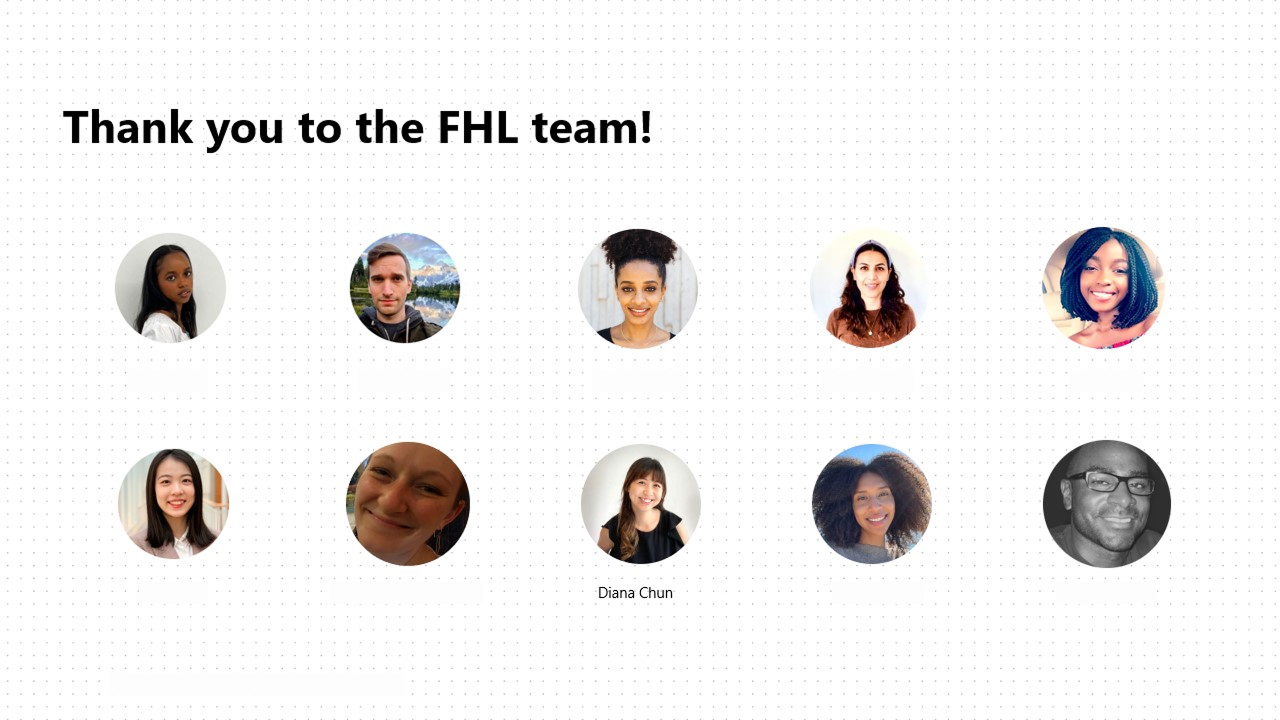
We gathered the outcomes and presented them as our final insights at the end of hackathon week.

Microsoft design conference
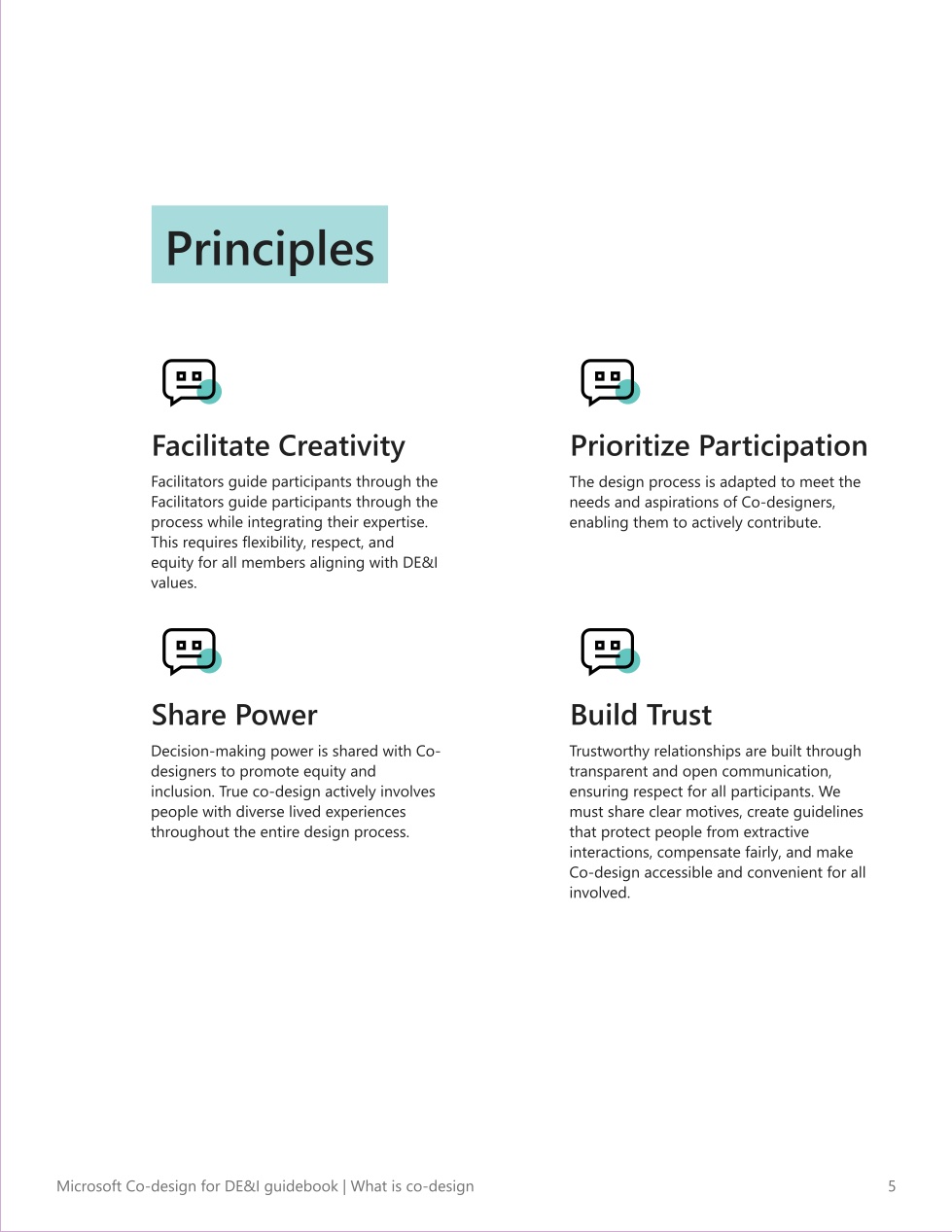
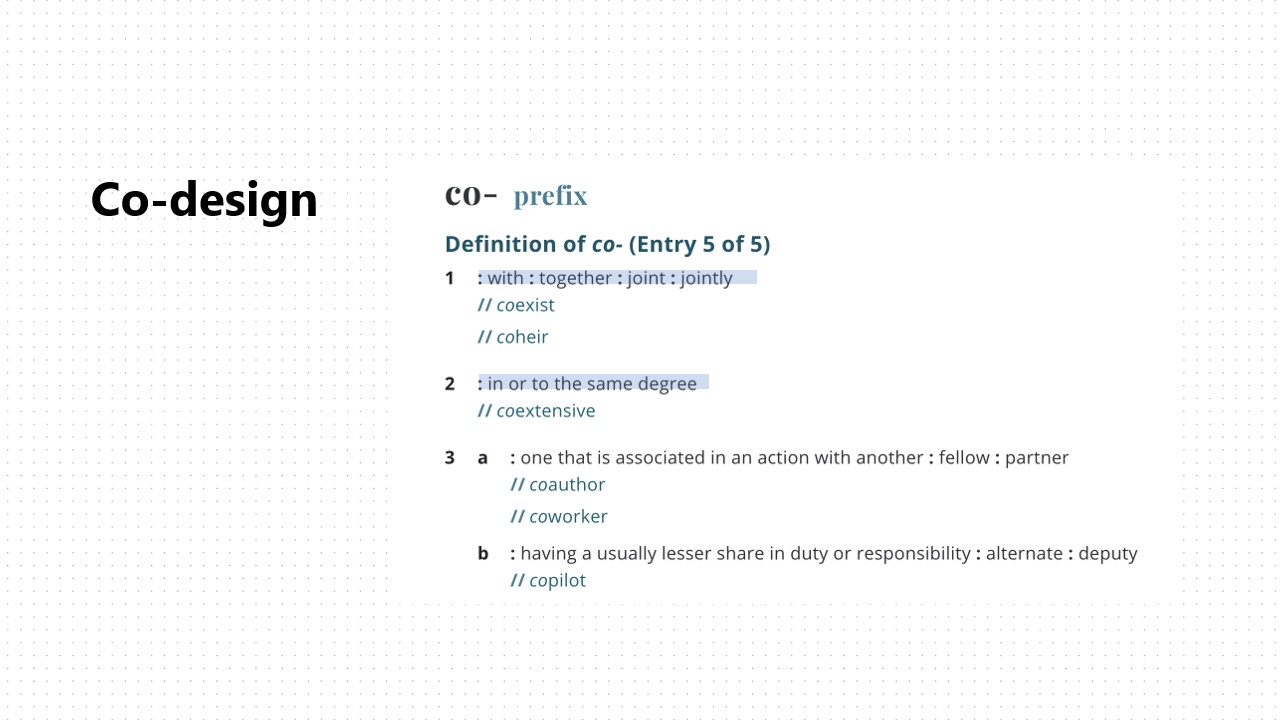
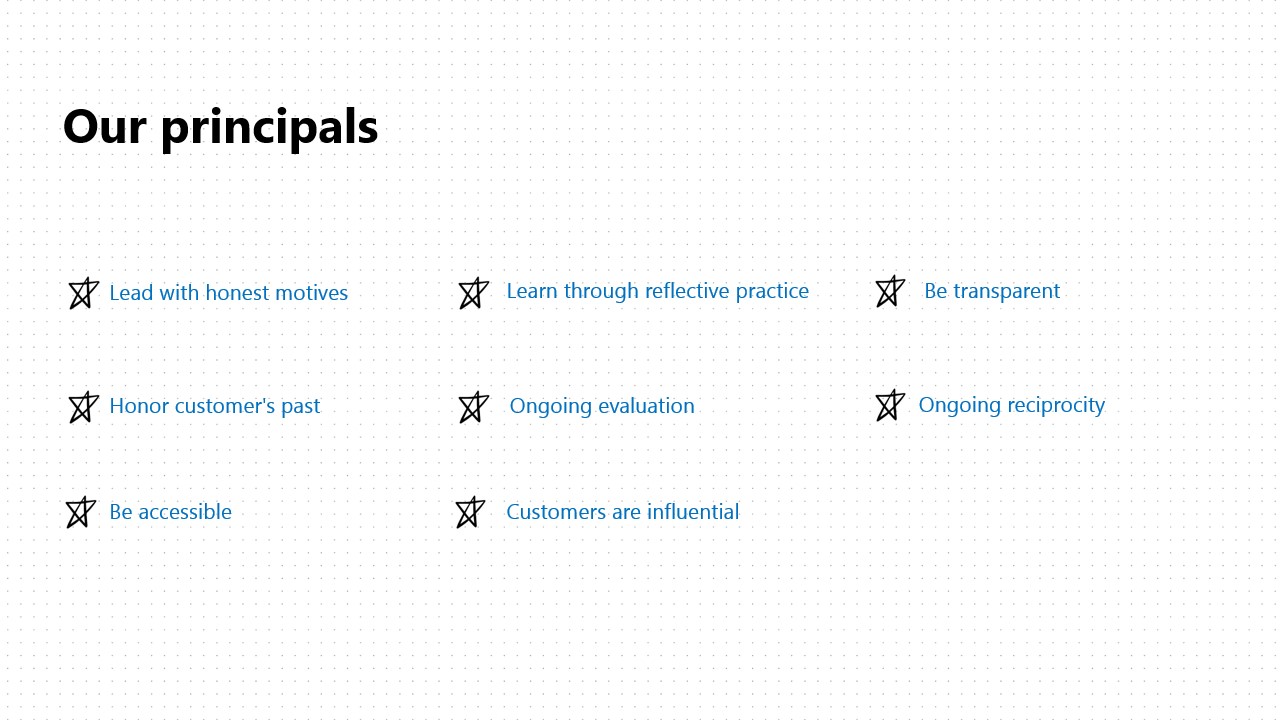
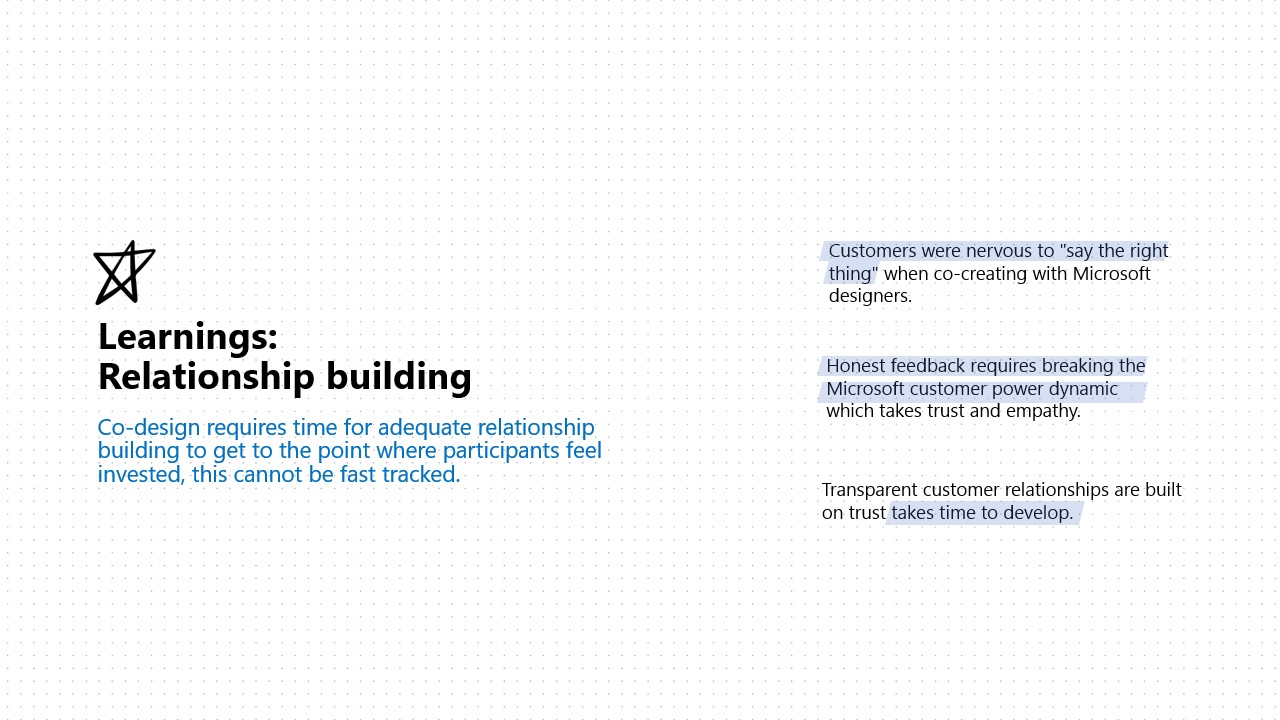
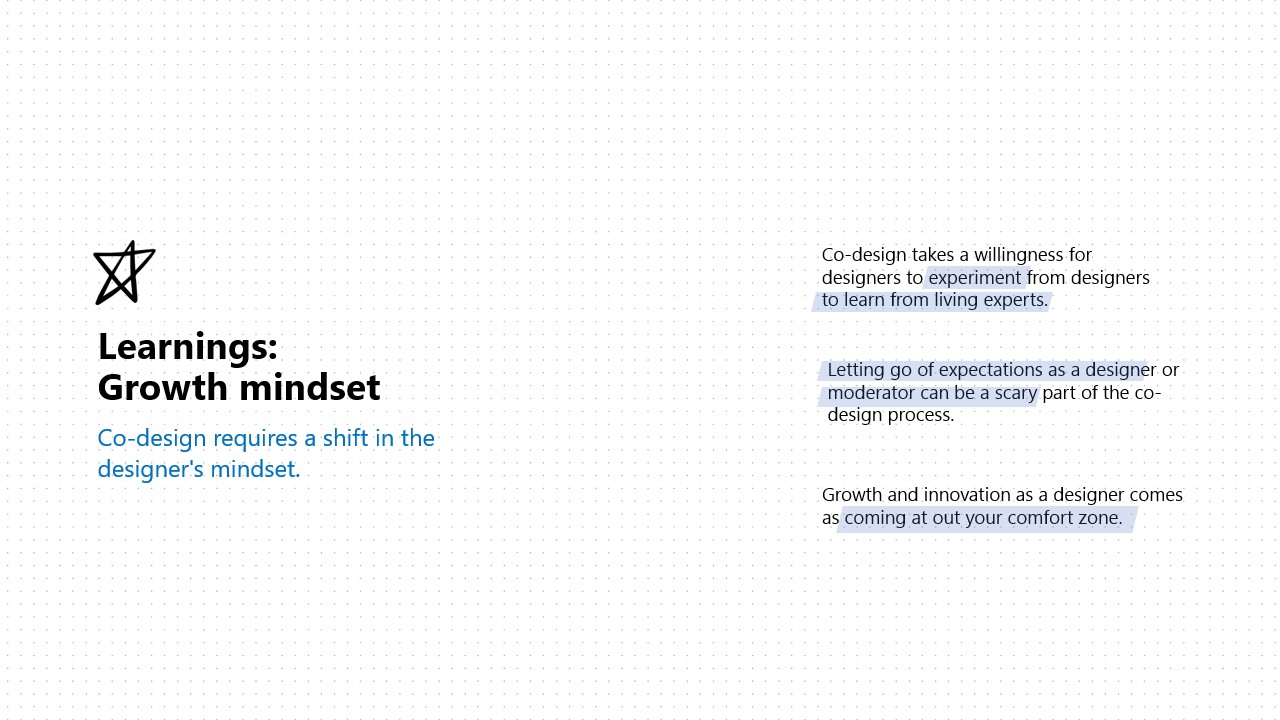
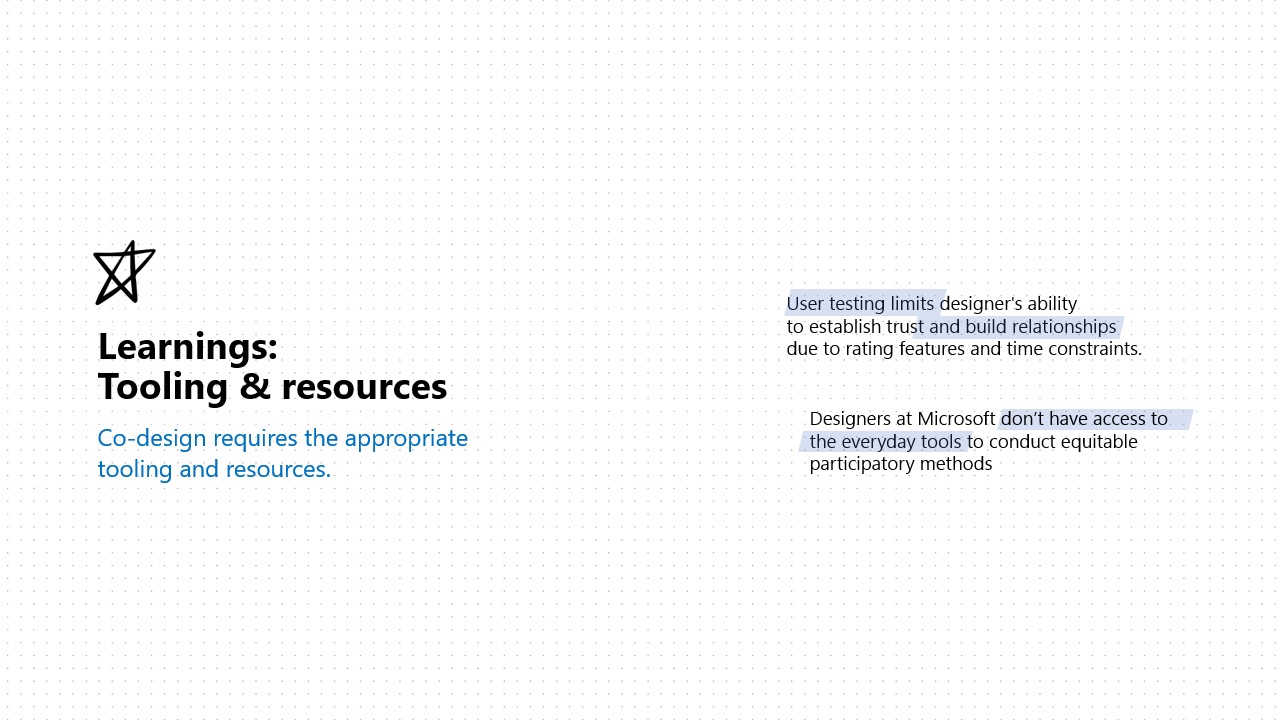
Building on what we learned from co-design testing during the hackathon, we put together the Co-design for Historically Excluded Customers guidelines. We submitted them and were selected to present at the Microsoft design conference.
The enthusiasm from the design community made us one of the finalists for external publishing*, and Christina Mallon, Director of Inclusive Design, reached out to continue the work with official company support.
*Currently under legal review.
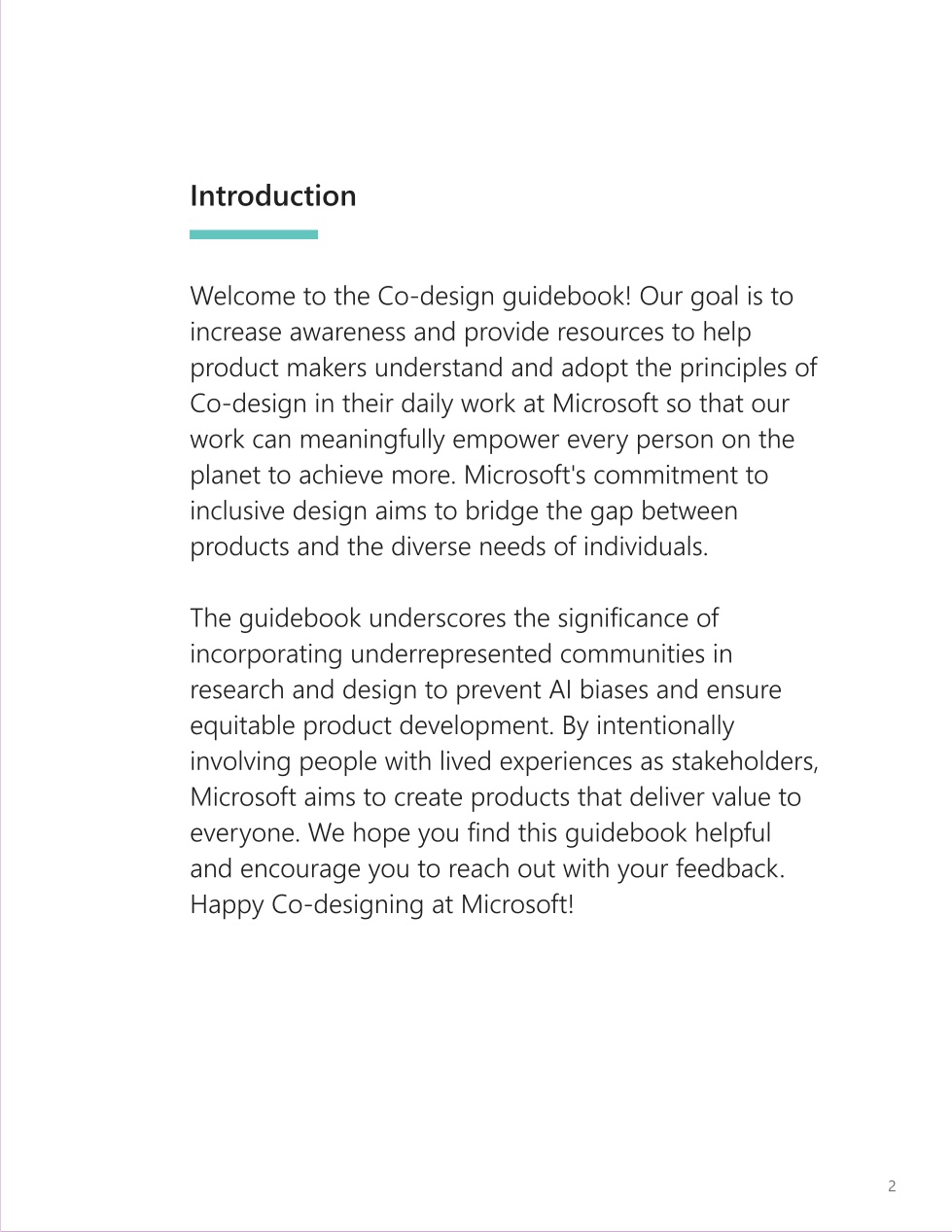
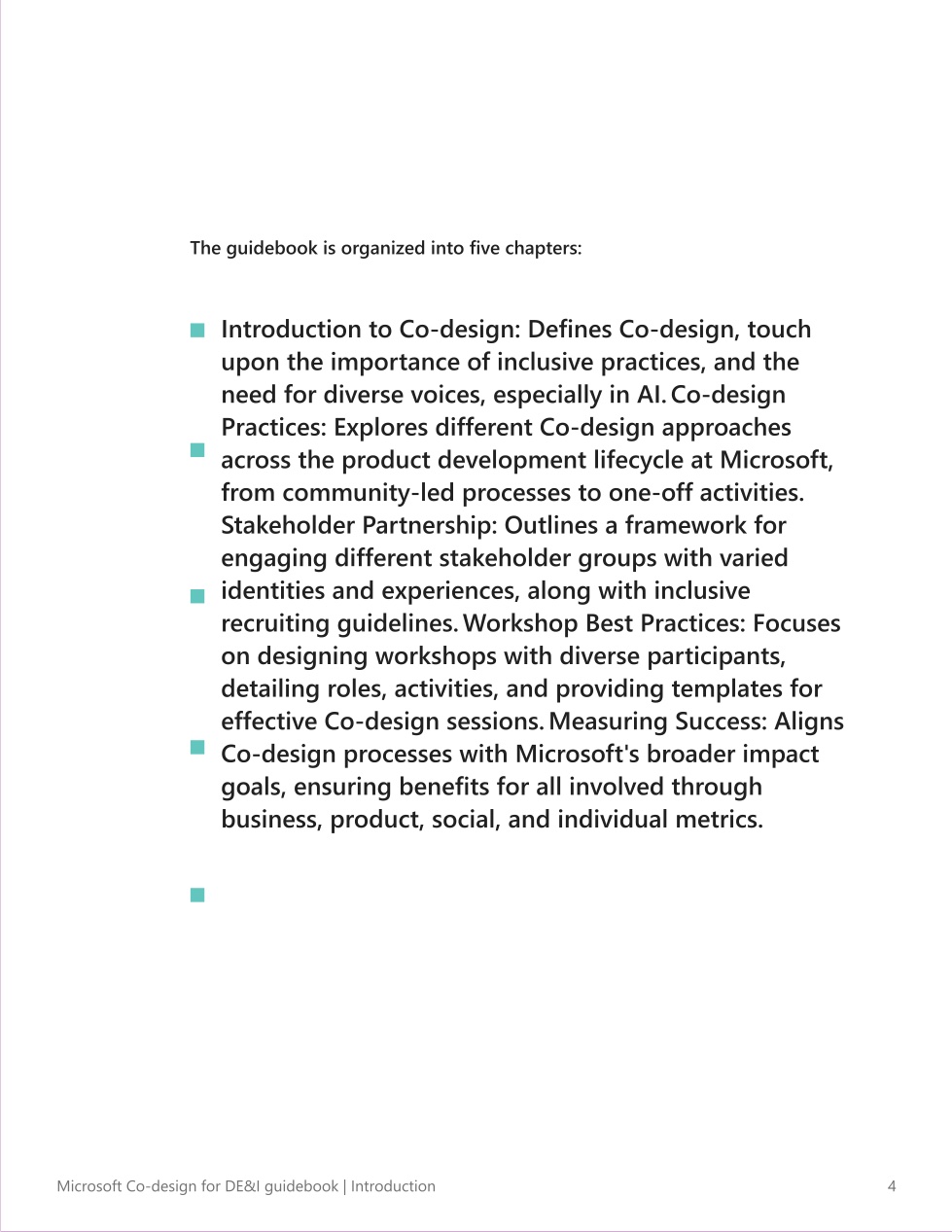
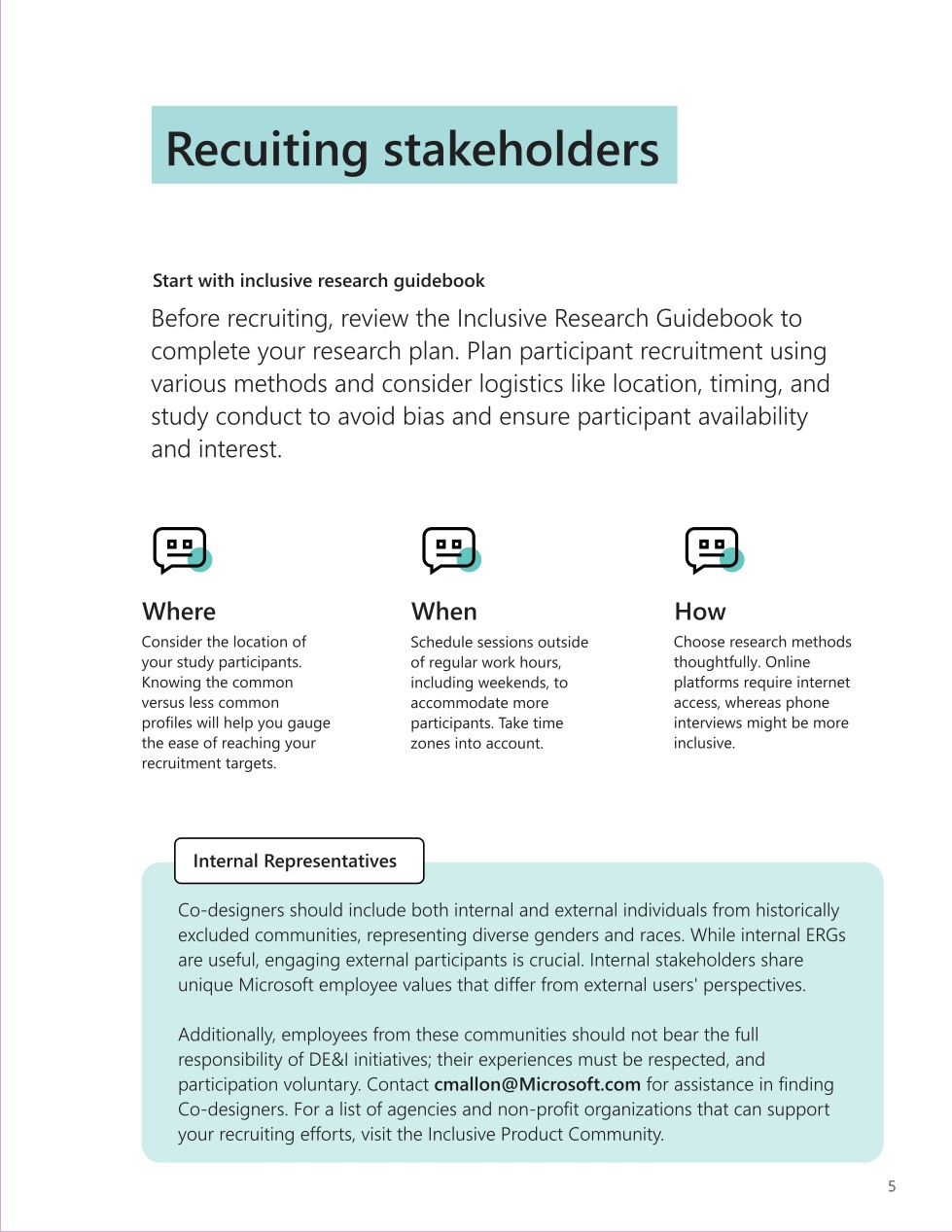
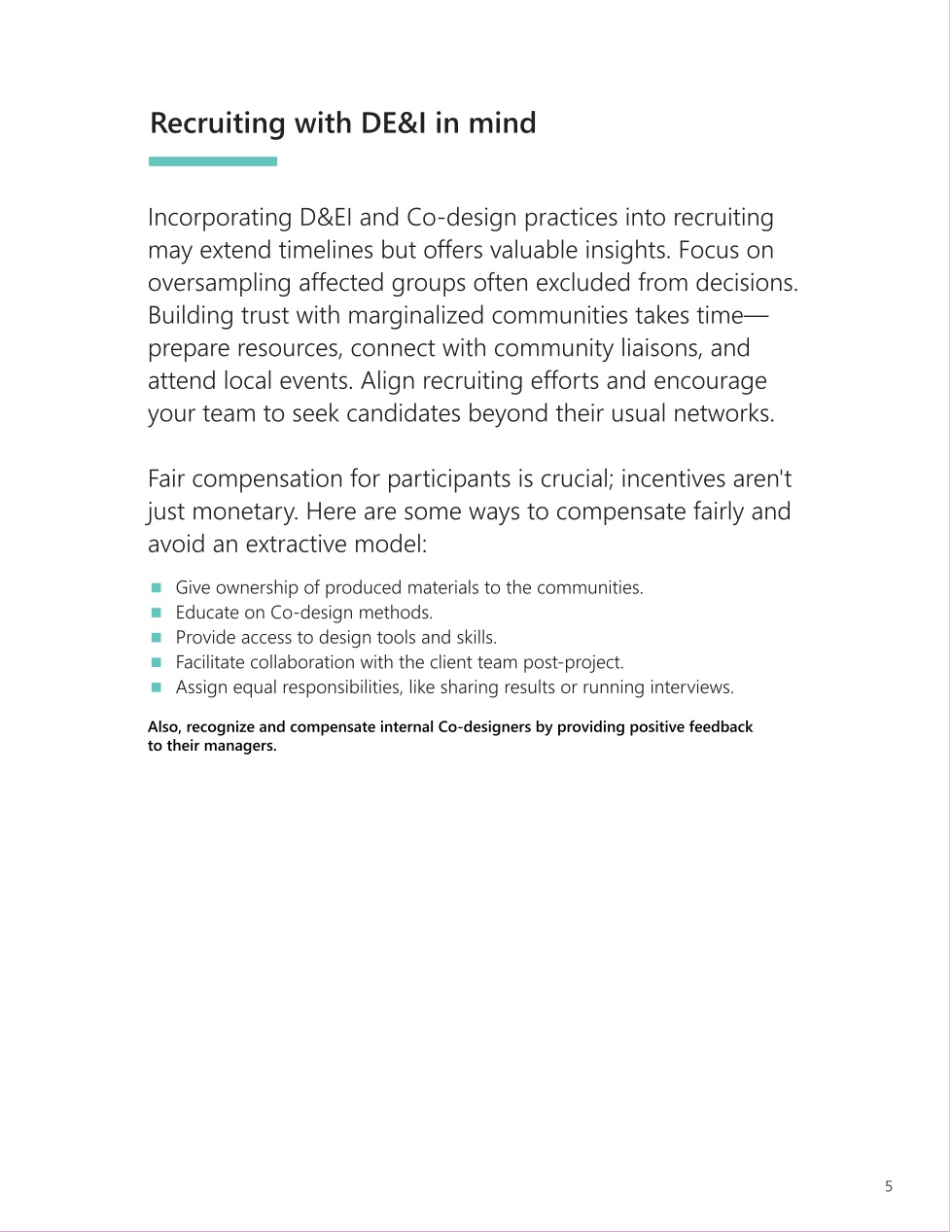
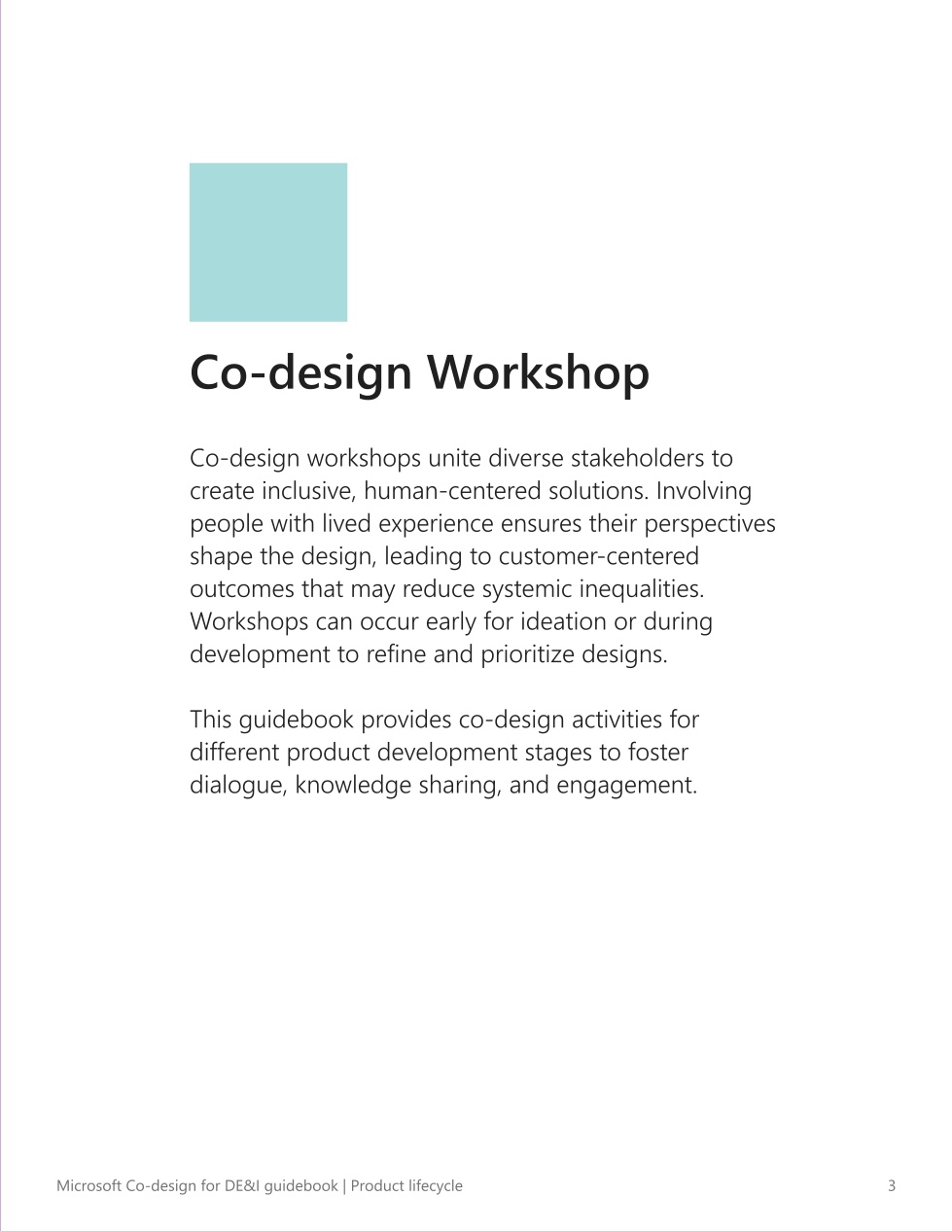
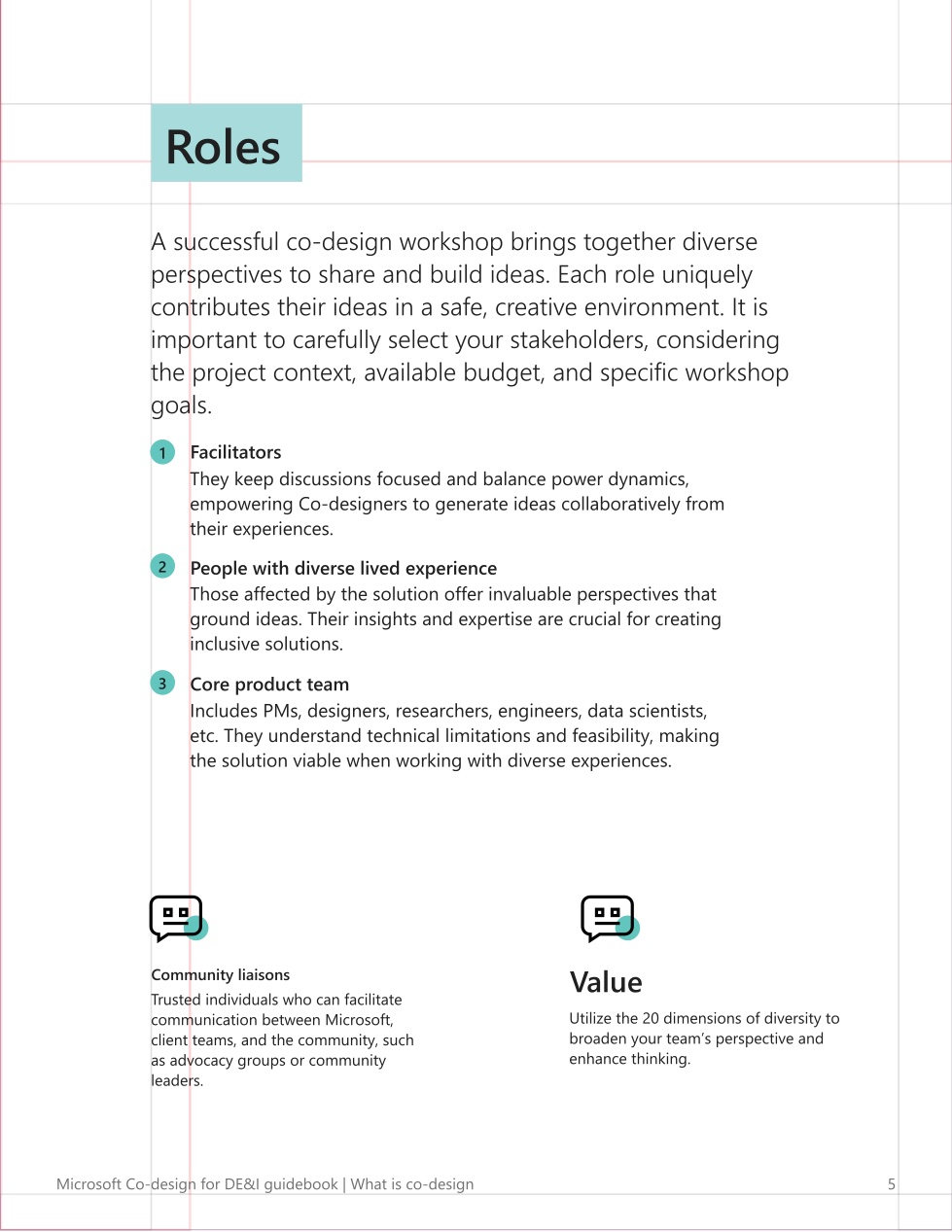
Co-Design Playbook (WIP)
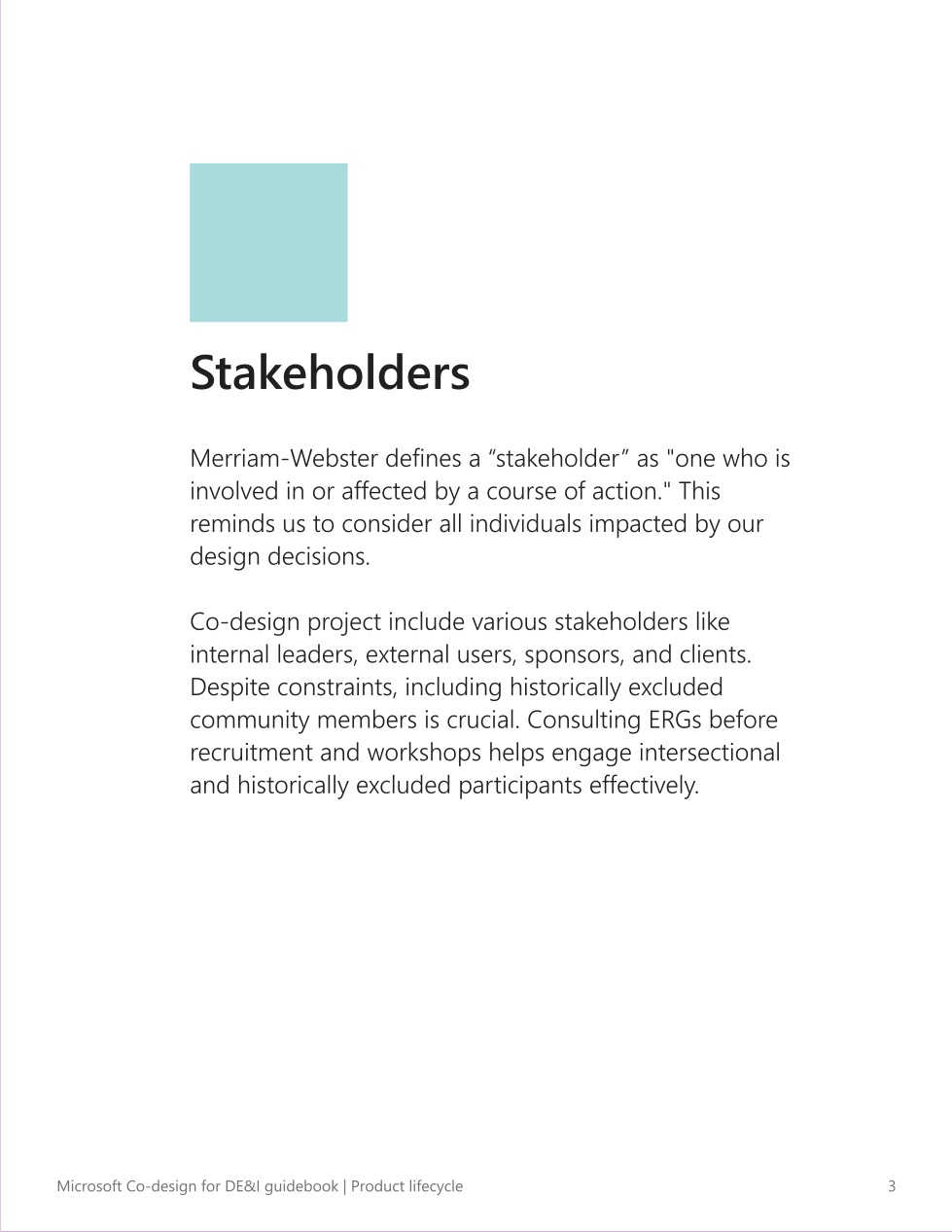
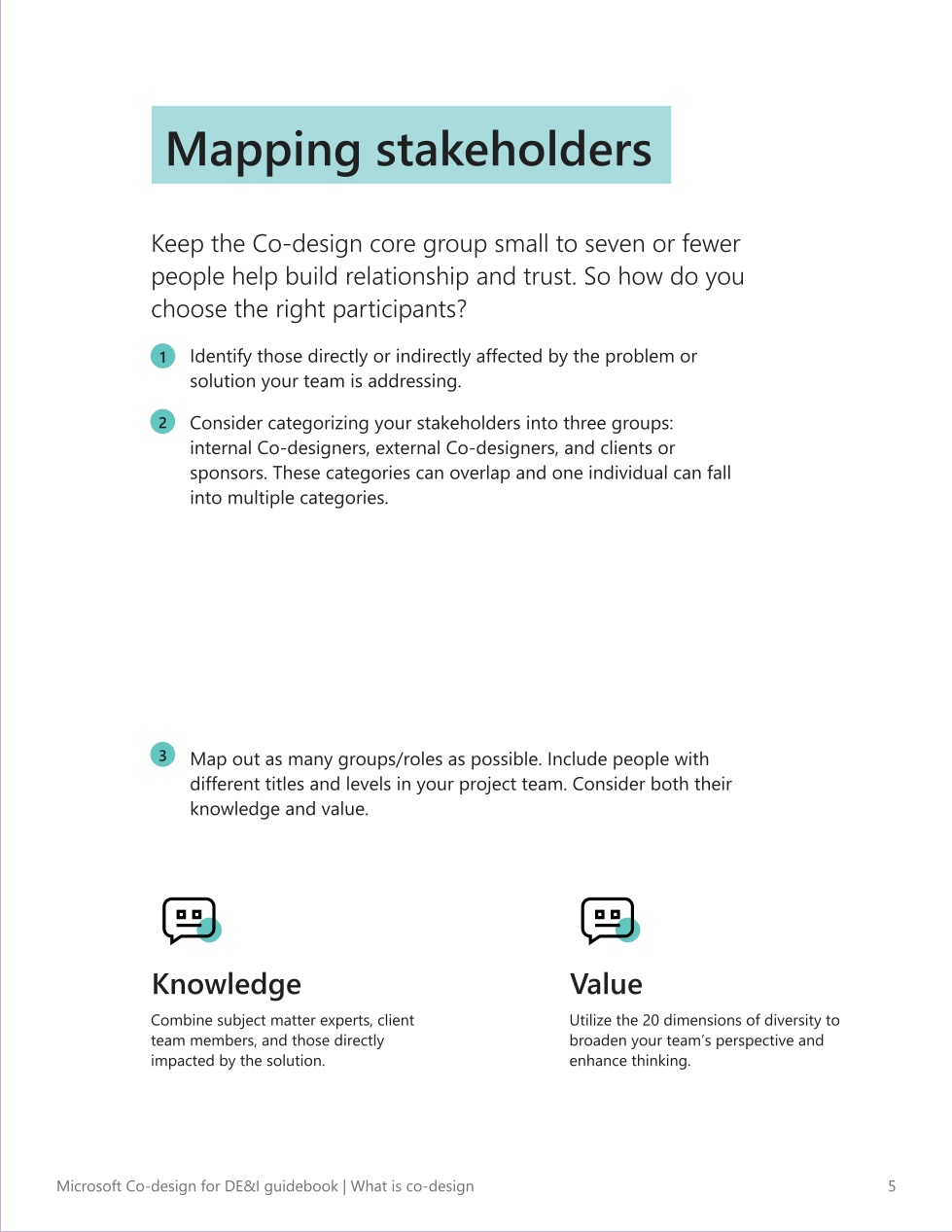
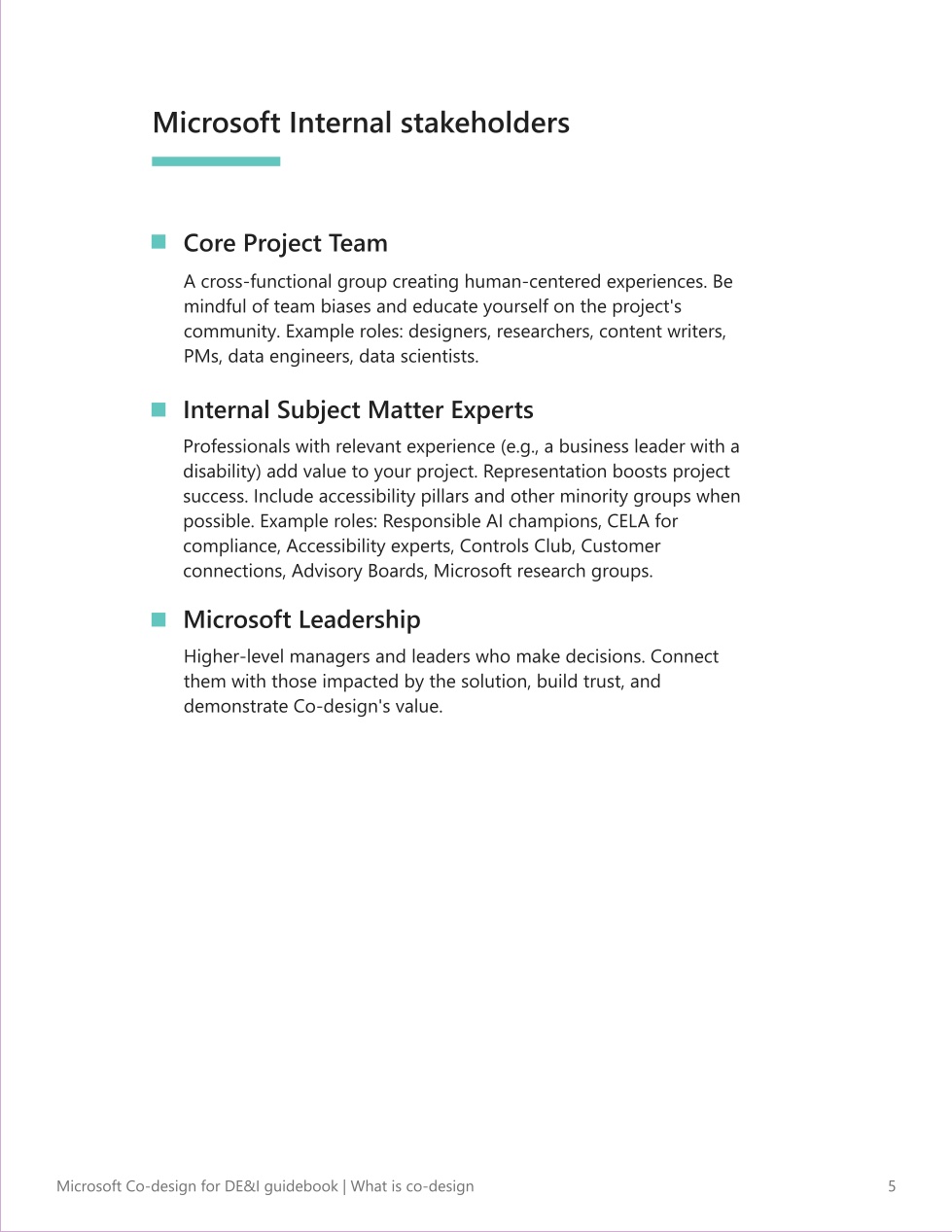
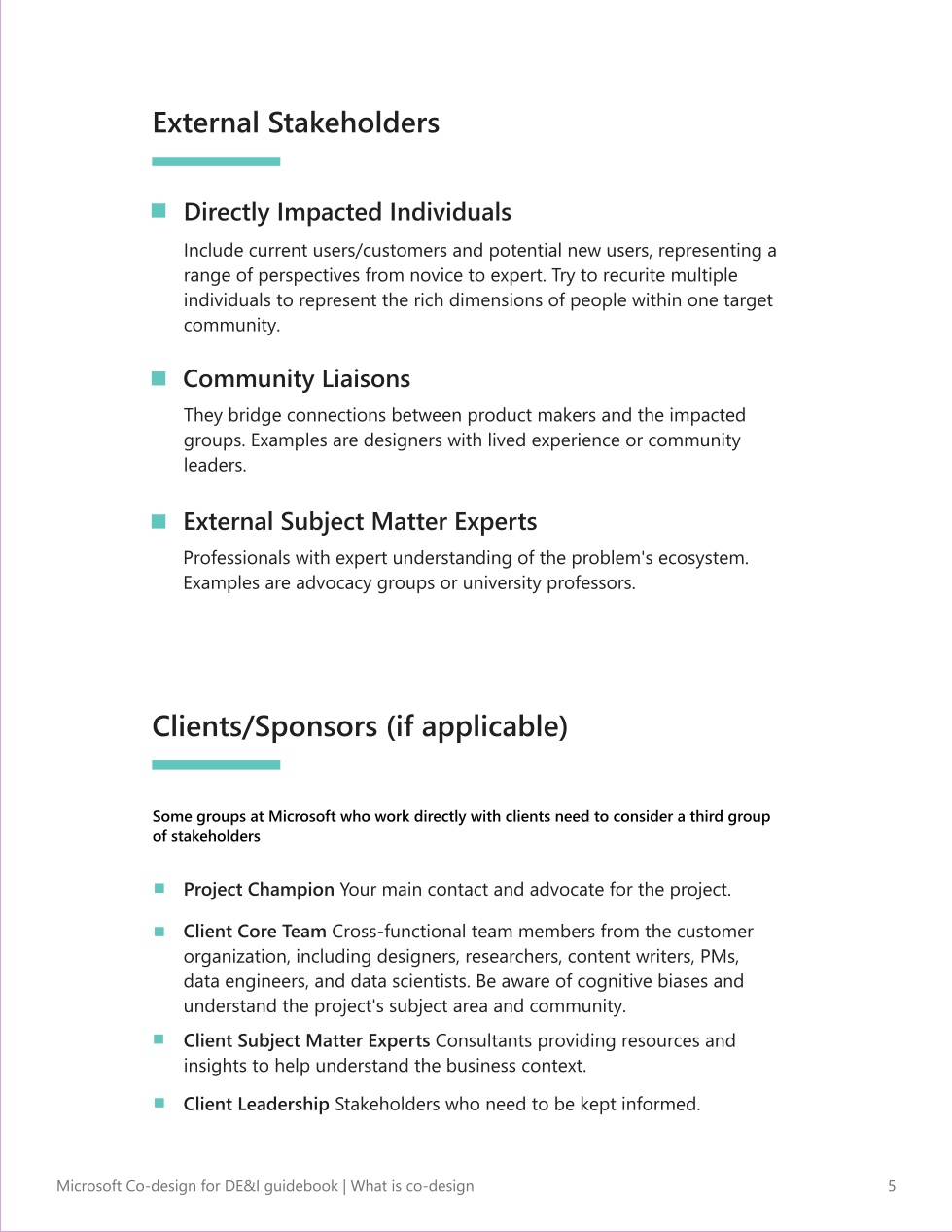
I contributed to every chapter and was the lead writer for “How to fit co-design into the product lifecycle.”
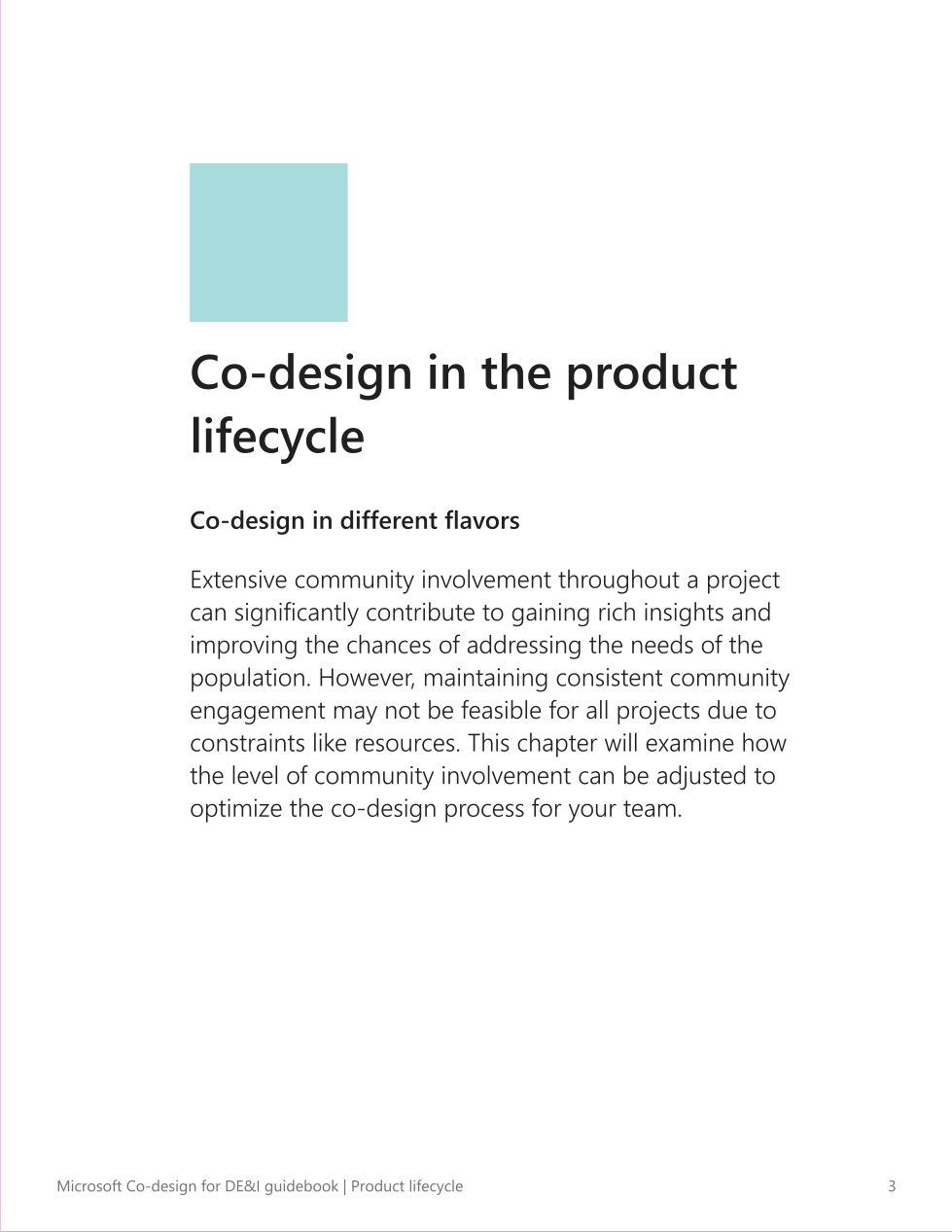
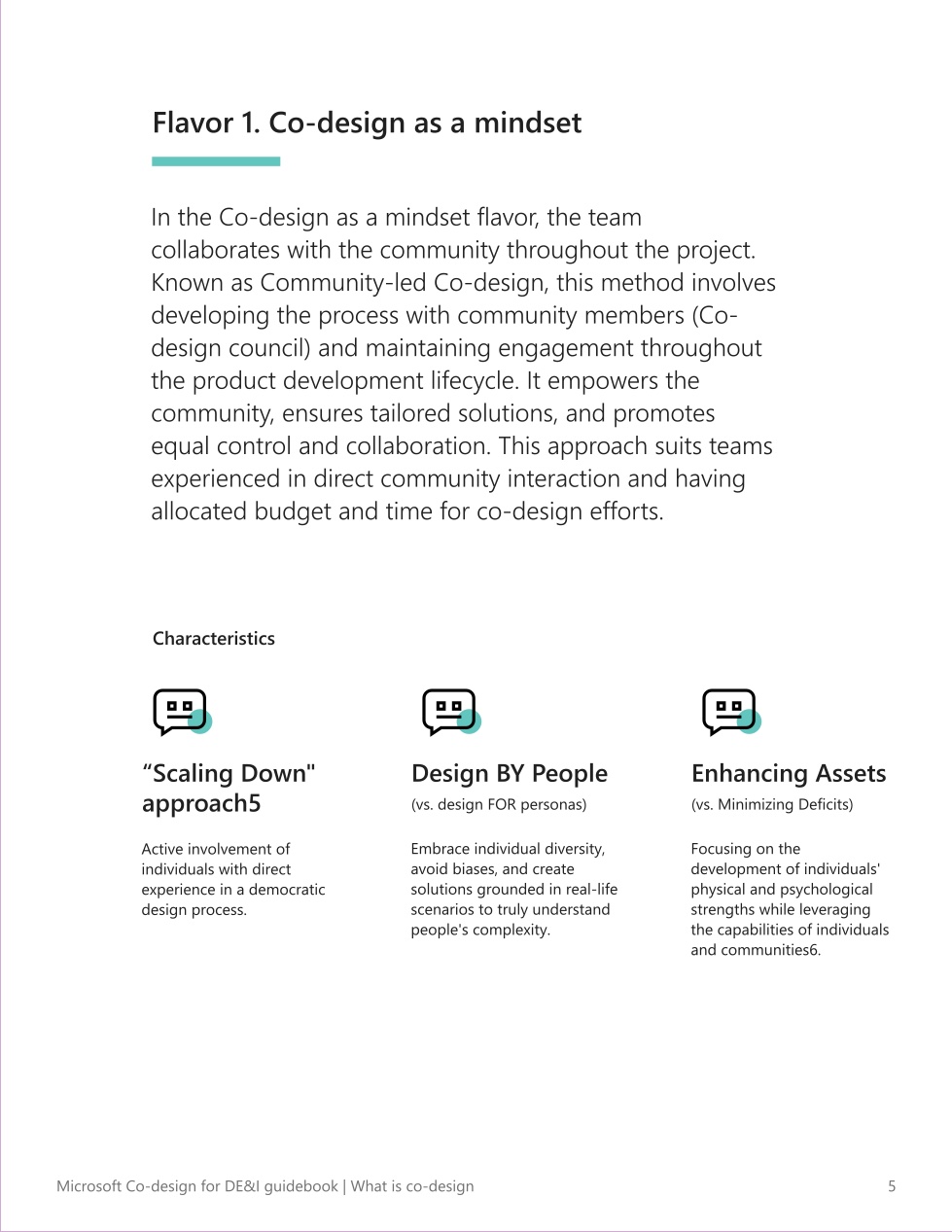
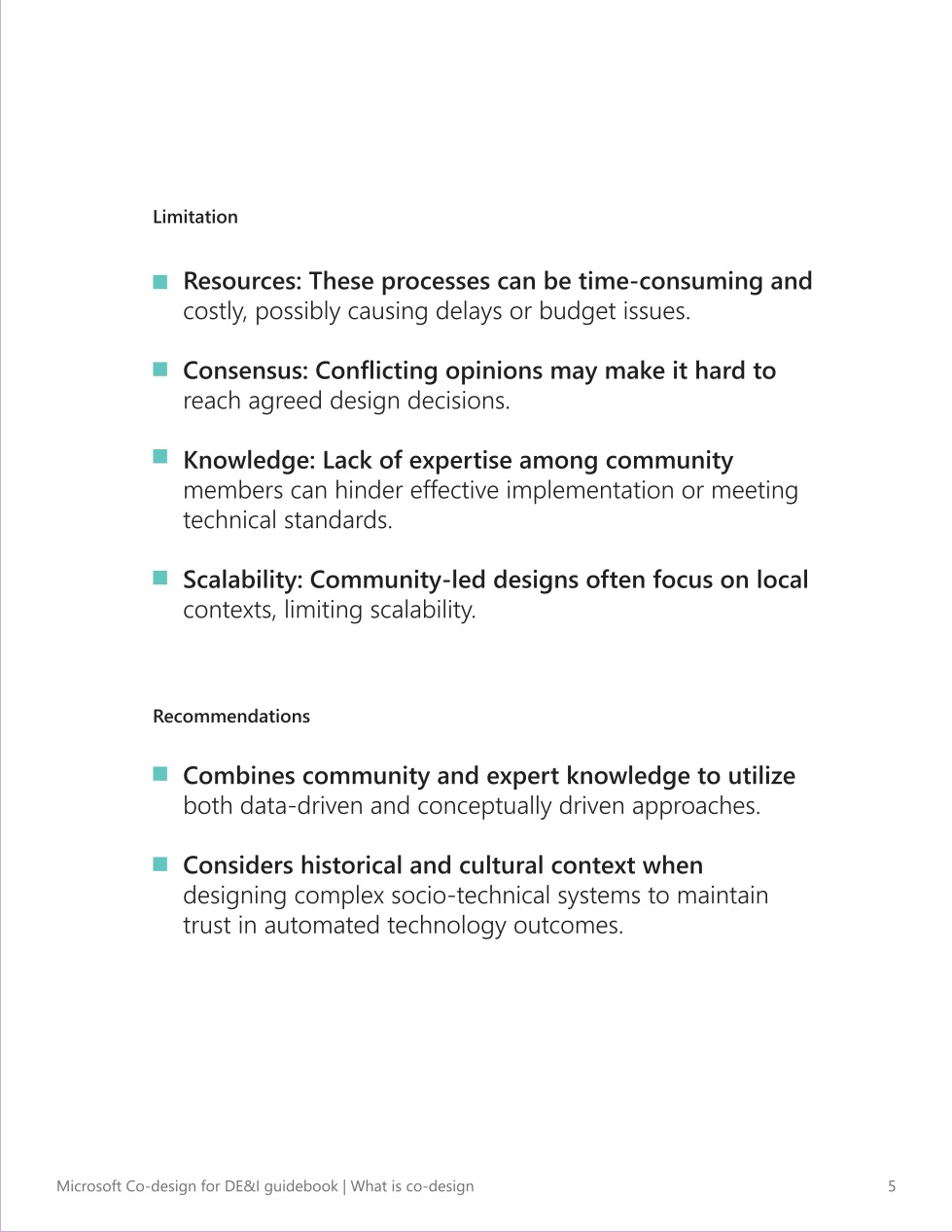
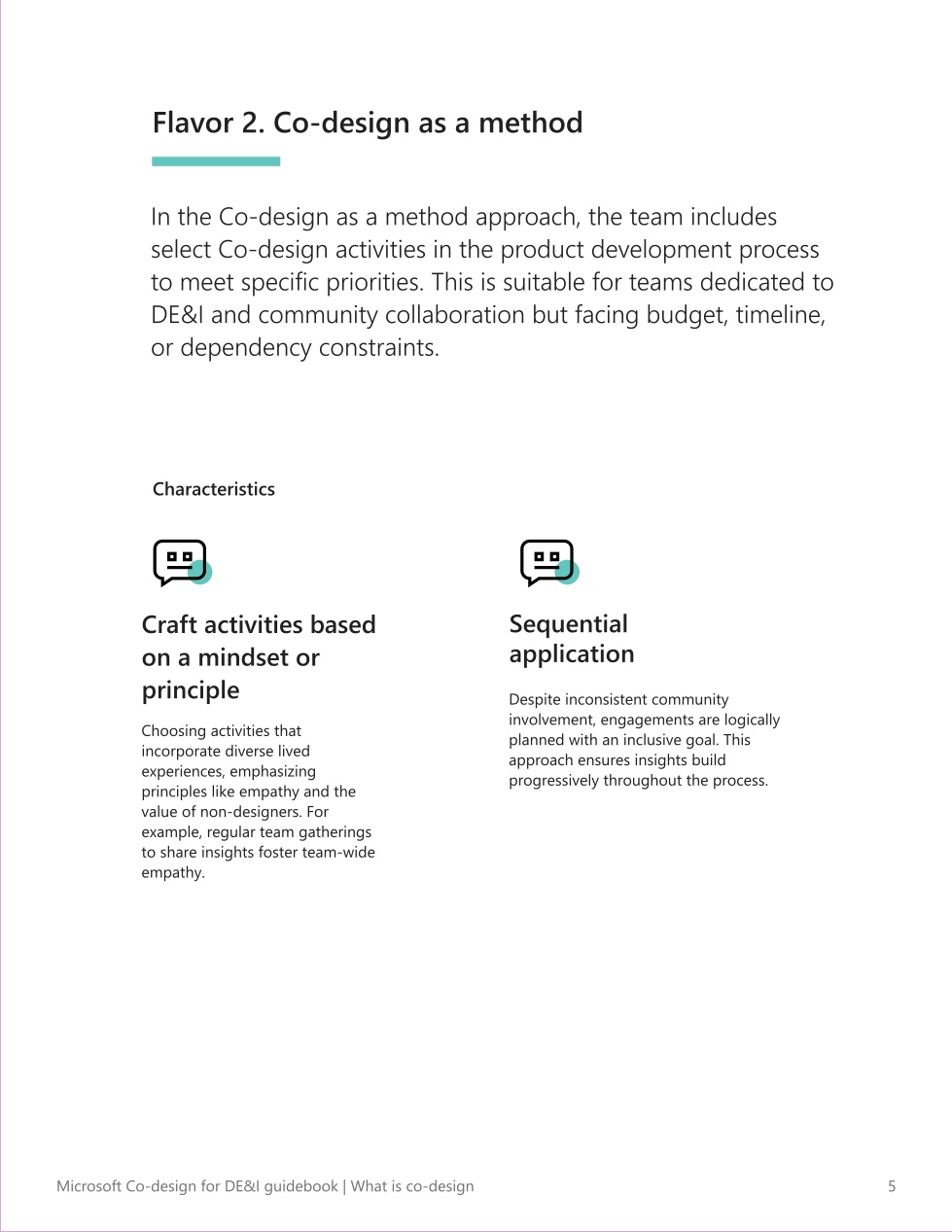
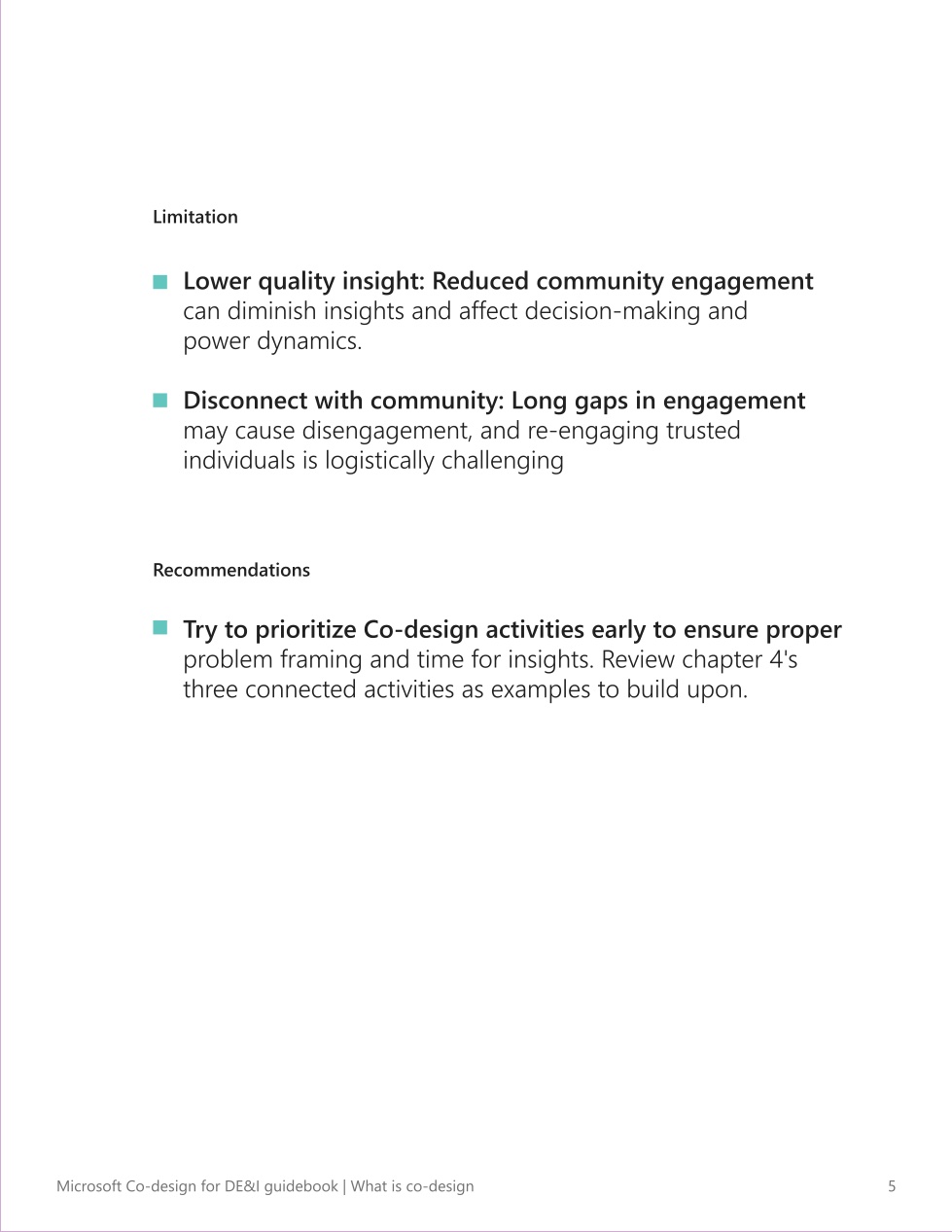
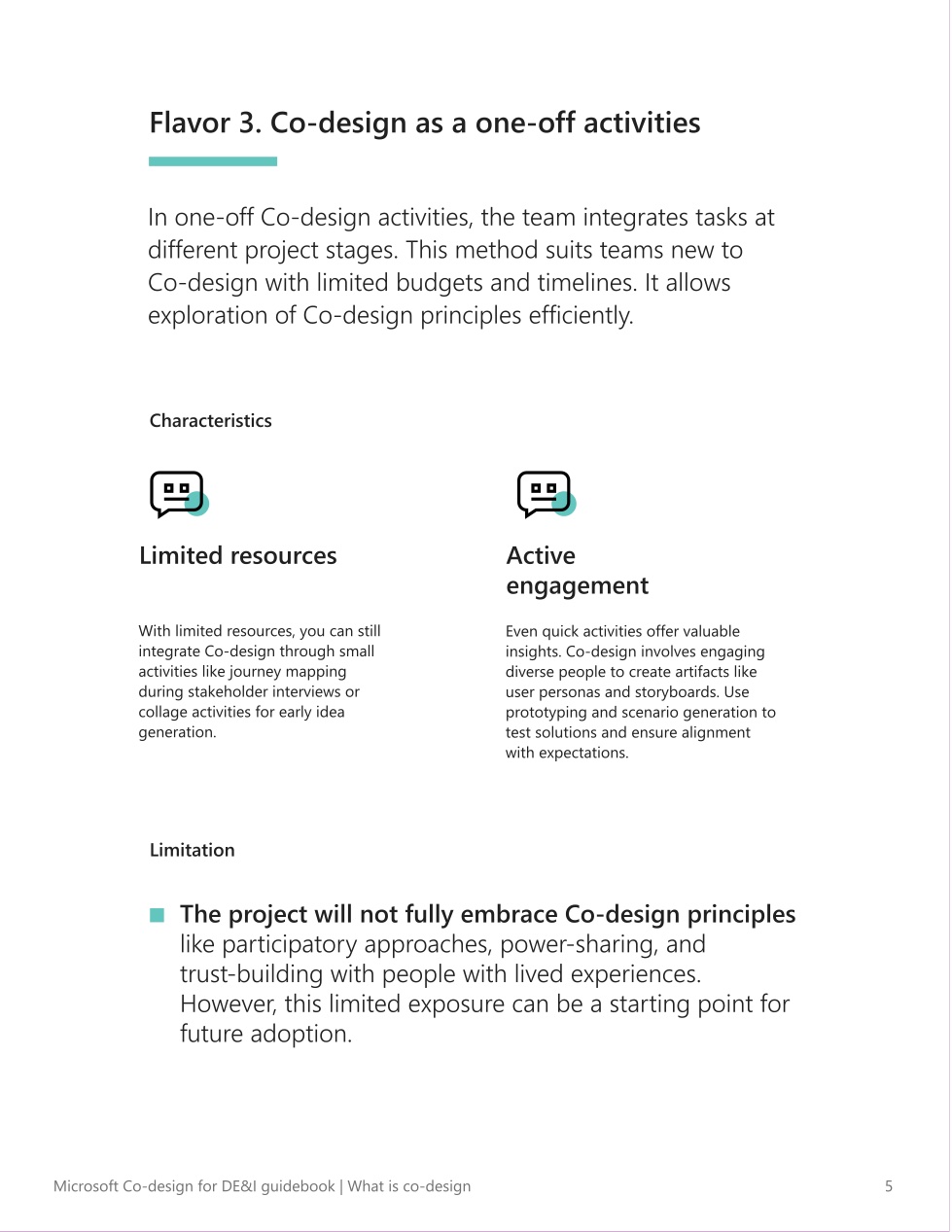
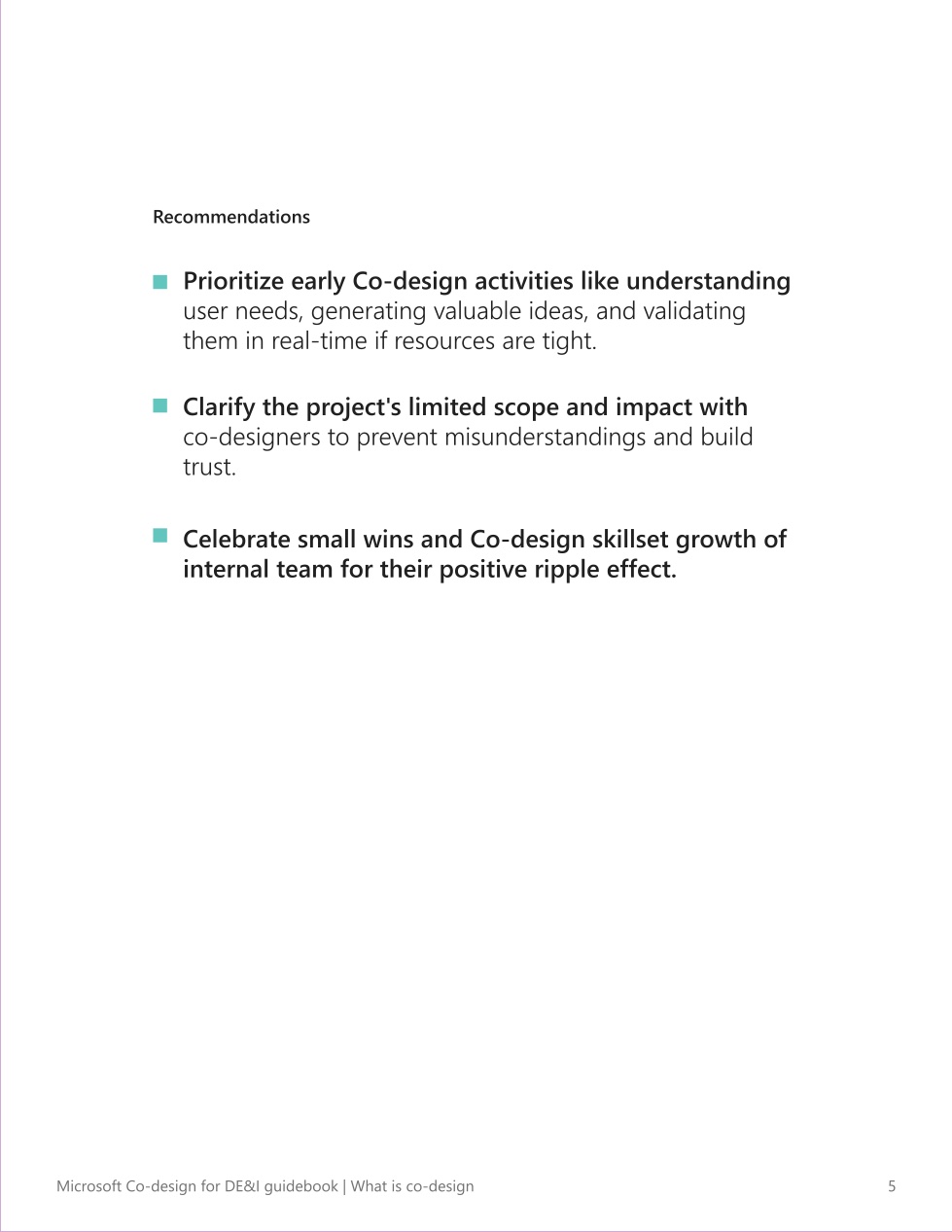
The chapter starts with a question: how can co-design, often used in civic and grassroots projects, be adapted to corporate culture? The answer: start where you are. We lower the barrier to entry for Microsoft product teams while holding to the standard of ethical co-design, offering three simple flavors of co-design as a framework.